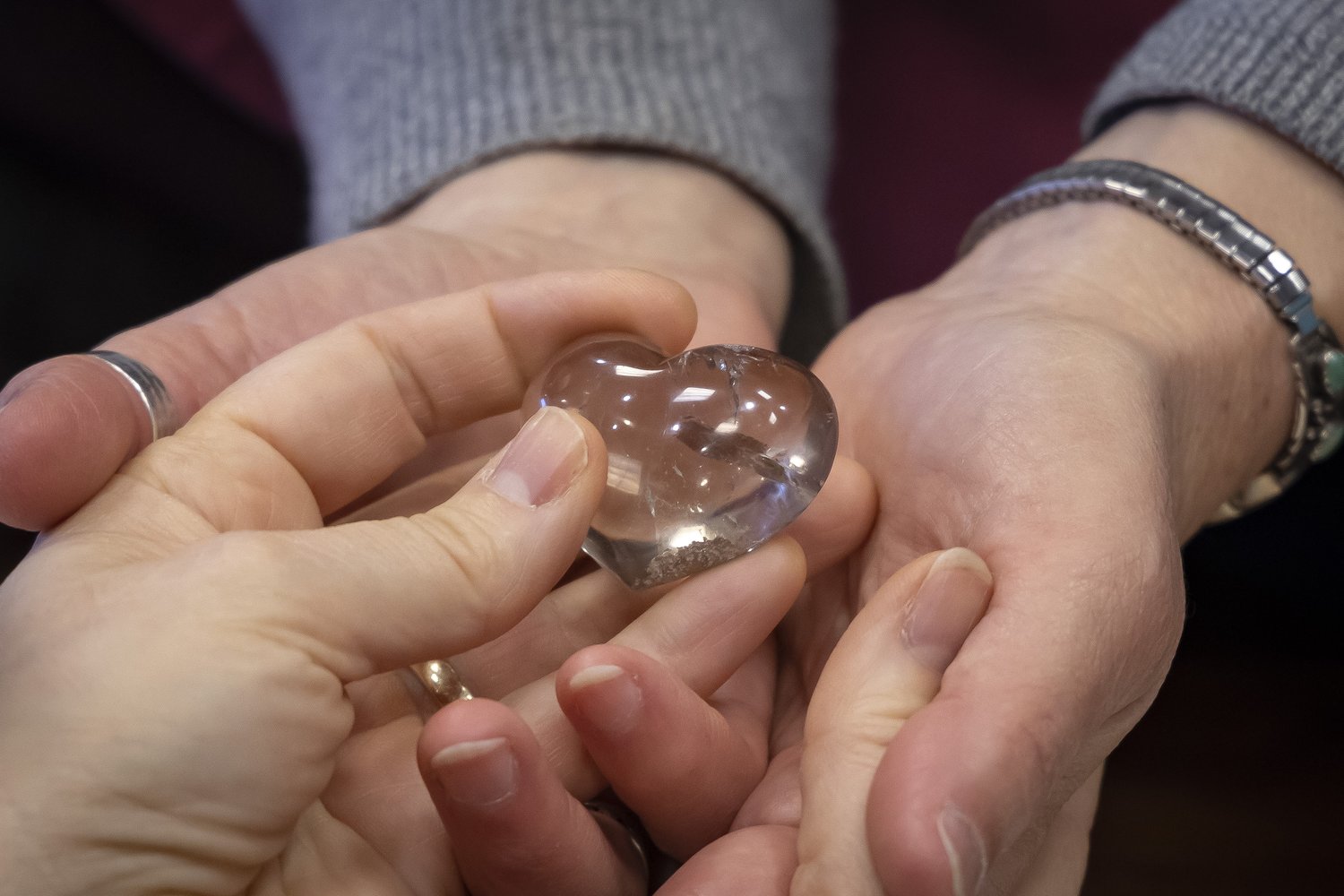
Sprained Ankles. (And What Else is) Nu?
I don’t think I’ve mentioned that I’ve had a sprained ankle since the middle of July. As much as I pride myself on being emotionally vulnerable, it’s very hard for me to be physically vulnerable.
When I went to Urgent Care, the doctor wanted to offer me a medical boot, which I refused because it was so big. It took me two months to give in and get one myself, along with a pair of crutches. But I had to endure comments (from one child) about how “attention-seeking” crutches are.
We live in a culture that doesn’t allow for much vulnerability in general—one that sneers at “weakness.”
My older daughter gave birth just a few days ago to her first child. Yes, we’re first-time grandparents!! Such joy! And what vulnerability! And anxiety.
Where does all the anxiety come from?
While we happen to live in a time, place, and circumstances with access to the best possible care, the messages coming at us are filled with all the terrible things happening, and all that can go wrong. For pregnancy specifically, few and far between are messages of the power of the human body and its natural ability to do what it’s designed to do.
On the other end of the spectrum, we are bombarded by messages of personal power.
The truth is, this business of pregnancy and birth is hazardous. Living is hazardous, as my stepfather used to like to say—and so vulnerable.
On Yom Kippur, I had a chance to really sink into that feeling of fear. As I’ve said before, it’s a time of facing our vulnerability as humans, and I was facing it in real time. I cried and cried, praying that the birth would go smoothly and all would be well. But I kept having scary images come to me, which I also pushed away, telling myself it was “just my anxiety.” Then positive images would come as well, assurances that all would be well.
But I often get the message from others that anxiety is a personal flaw I need to overcome. And I couldn’t stop the tears. I tried to hide under my prayer shawl. But people around me noticed, and cautiously asked, “Is everything alright?” And I would turn to them and smile with tears in my eyes and say, “Everything is perfect.”
Because it was.
Ten days later, we got the call that they were at the hospital. There were two days of waiting, with essentially no information.
Finally, at 6:15 on Friday evening, just as I had surrendered to not knowing, and we were about to light the Shabbos candles, a text came in. It was from our daughter, with a picture of this truly (objectively) beautiful baby: “He’s here!! He’s perfect!!!” with a hint that the birth had not been uncomplicated. My visions had been correct.
We raced to the hospital. And he was perfect. Our daughter was still regaining her strength. It had been a scary afternoon.
After a wonderful visit, my husband and I headed home, deciding we could finally relax and sleep. For the next two nights, though, anxiety flooded me. Even though all had gone well and everyone was fine in the end, it left its imprint. I still found it hard to sleep.
Questions came: was there something wrong with my faith? Was I ruining this perfect moment? Why couldn’t I just be happy and stop ruminating? I even wondered whether, rather than the visions being a prophecy, I might have caused the problems during birth with my anxious, “negative” thoughts.
Because I’m that powerful—like God! As a friend pointed out.
When my husband and I returned to the hospital on Saturday to visit, at one point we left our daughter alone and went out for a bit with our son-in-law. We made our way down to an outdoor garden area. As we were sitting chatting, my husband suddenly noticed a Sukkah over in a corner. We hadn’t gotten to eat or sit in one yet during the holiday for various reasons, and here it was the last day! Excited, we went to check it out.
As we approached the doorway, others were on their way out. They were a group of three Ultra-Orthodox Jews. I immediately felt a sense of vulnerability, like I didn’t belong there.
But they left, and inside we found three other people sitting at the long table. They immediately welcomed us and told us where we could get hot food—anything we needed in the “Jewish Room” down the hall where (there they were again) the same group of Ultra-Orthodox Jews were. Amid their conversation in Yiddish, they helped us find food provided to those looking for a kosher meal as they or family members were healing. It felt comforting in a vulnerable moment.
We returned to the Sukkah and sat with the second group of three who had become friends over the previous days. They were dealing with complications from their own births, and great unknowns about the future. They had bonded in their vulnerability, and we quickly bonded with them as well. We laughed with joy, and also talked seriously about the fragility of life we were all squarely facing.
Here we had found this shelter together, this Sukkah, vulnerable to the elements, with its precarious walls and view of the sky through the branches and leaves that made its roof, comforted and cared for by strangers who had provided all the food you could possibly need.
Lovely, special—and perfect.
The next day, on Simchas Torah, a holiday when Jews dance with Torah scrolls, my husband and I went to synagogue. We suspected we would be getting a call to help the new family get home from the hospital. But there was so much to celebrate, and we really wanted to share it with our community. I was given the honor of carrying a Torah scroll even before anyone knew about the new baby.
A teaching was given about why we dance at the end of this intense cycle of holidays that comes at this time of year, from Rosh Hashanah through the end of Sukkos.
One answer, according to a Hassidic teaching, is that we have gone through deep spiritual work; after all the intellectual searching throughout the year, during these holidays we sink into the spiritual realm. We are now ready to transcend the intellect, and dance with our feet, not our heads. Since the Torah scroll has no feet, we become its feet, holding the Torah close to our hearts, reaching within and connecting through the heart instead of the head.
Another teaching we heard refers to the broken tablets of the Ten Commandments—you know, perhaps, the ones that Moses shattered in a rage. In response, God gave Moses a second set of tablets. But the broken tablets were not discarded. Rather, they were stored in the ark along with the new, perfect set.
Why?
Because we all carry our brokenness along with the perfection of the world simultaneously.
Though it’s important to have moments when we can feel pure joy and let go of our anxiety, when anxiety does present itself, to me, this means the anxiety, which is part of our brokenness, should be lovingly and compassionately greeted and allowed in—just like those beautiful moments of connection we shared with the people in the fragile structure we call a Sukkah; all emotions were welcomed.
As we begin a new year and a new cycle of Torah reading this coming Shabbos, with the myths that tell of the beginnings of life on Earth, with each creation, the God of our Torah says, “it was good.”
Yes, it is good.
May we welcome all of life, with all its fragility, and be able to hold each other in our vulnerability with compassion and love. May we all have a sense of belonging, with all that we carry, and without judgment.
Home Alone, Yom Kippur, & (not) Cancer
AI and the possible end of the human world has been in the news a lot this week. Also, the EPA throwing all caution to the wind on carbon emissions. We might just be doomed.
But in the meantime, the other day, on my way to a shiva minyan I was leading, I gave myself some extra time to stop and enjoy some nature.
It was a cool, absolutely gorgeous, picture-perfect day after a long hot summer. I got off the bus at 59th Street across from the no-longer Plaza Hotel and entered Central Park.
People were strolling, sitting on benches, a young musician was singing love songs. I found one of those funky, hand-carved wooden benches by the water with a little bow bridge in the distance as the sun got low in the sky.
As soon as I sat down, I noticed a heron just a few feet away standing stock-still, camouflaged in the bushes at the edge of the pond. It was watching me. I pointed it out to a man sitting nearby. He looked up, smiled a little, made a comment, and went back to his phone.
A young couple came by and I pointed it out to them. They got near, asked if it was the huge red fish I was pointing at or the bird. I said the bird (I couldn’t see the fish from where I was). I could hear an accent, realized they were tourists, and was curious where they were from. “Denmark.” “Ah, cool!”
Then they asked, pointing to the bridge in the distance, “Do you know if that’s the bridge from ‘Home Alone’?”
I know this is a common touristy thing to do now: come to New York looking for movie landmarks. People don’t just wander around, seeing where the path may lead them.
And I probably don’t appreciate enough the awe people have for New York City (though I have it, too, and feel very privileged to live here). But in that moment…when all I do is desperately look for nature among the often overwhelming concrete, I was taken-aback. I just shrugged and said I had no idea. I’ve never even seen Home Alone. Silly movie.
Maybe if we had more awe for nature and put away our phones, we wouldn’t be in the situation we’re in.
And why care this much about things that aren’t real?
In the past two weeks, I’ve done four funerals and a wedding. (I recently rewatched “Four Weddings and a Funeral” with my husband and couldn’t believe I ever thought it was funny, interesting, or romantic).
The funerals feel incredibly fitting for the time of year, when we find ourselves in the Ten Days of Rosh Hashanah and Yom Kippur. These holidays are all about confronting our mortality. There’s nothing like a funeral to remind us that we’re mortal. It’s a time to reevaluate our lives, how we’re living, how we would like to live differently—and make a go at it one more time for the coming year, asking and offering forgiveness, casting off old habits that no longer serve us, making vows to change (or at least try).
I’m working with a man in his fifties who has pancreatic cancer, doing life review. I go to his house, we talk about what it’s been like for him since he was diagnosed in the early spring, about his life going back to childhood. I give him assignments.
For the first assignment, he wrote a letter to his parents and gave to them on Rosh Hashanah. He thanked them for the good ways they’d been parents to him growing up, the things he appreciated about them. It was meaningful and they were touched, he could tell.
This time, considering that it’s Yom Kippur on Monday, I thought it would be good for him to begin writing a Viduy, or deathbed confessional, to explore forgiveness, ways he feels he needs to forgive or be forgiven.
He’s in a kind of limbo, which he recognizes only as an exaggerated limbo that we all live in, yet we are (woefully?) unaware; there is a new, experimental treatment that could add years to his life, and seems to be working for him. After weeks in the hospital over the summer, he’s actually gone back to work part-time!
He has a delightfully dark sense of humor, just like me, so he’s wonderful to work with. We laugh about how shocked people are when he jokes about his death. This time he told me he’d come up with a list in his head: “Five Great Things About Having Cancer.” I took notes as he talked, and it turned out to be longer.
I’ll share it here:
People visit you; old relationships are rekindled and strengthened. People actually show up; there’s no more, “Oh, we should get together sometime.” Sometime becomes now.
People buy you stuff (He showed me a pile of nice blankets).
You can eat whatever you want; because he’s lost so much weight, they tell him to eat all the ice cream and cookies he wants. (We laughed.)
You meet new people, like in waiting rooms; nurses and patients; you have real conversations about real things. No small talk, genuine connection. His social life has actually improved.
Families behave better—even well! (We laughed.)
You get away with stuff; you have an excuse (I have cancer). (We laughed.)
You live more purposefully, more mindfully; you’re don’t live on autopilot.
This one I call a bonus for him; he’s being forced to study something he was always interested in and never took the time to do: microbiology.
As we enter Yom Kippur on Sunday night, I leave you with these questions, some of which I asked him:
How can you take these lessons from cancer—that hopefully you don’t have—into your own life?
What are your deepest regrets?
What is your deepest pain?
What do you need to forgive—yourself or others—for? What do you want to apologize for?
What are your deepest wishes for yourself, your loved ones, and the world, in the coming year?
What are your deepest yearnings?
What commitments will you take on that you hadn’t thought of before reading this for living differently going forward?
What do you want to enjoy eating this year? (I think that’s funny.)
Maybe you’ll be home alone this Yom Kippur.
Maybe you’ll be in community and wish you were home alone.
Either way, you can bring intention into the new year, and be present for the birds and the fishes—and the bridges to who knows where they might lead.
May we learn to live in awe and mindfully, survive AI, and get the climate under control.
A gut yor; a good year to us all.
Falling Apart and Becoming. And Who Are You, Anyway?
Here’s a funny little story. Maybe I’ve told parts of it before.
My older daughter has been bothering me to set up an online account with Social Security for about a year now (safety/security issues to protect my account from fraud).
I tried several times back in the spring. Each time, I’d get to the last step in this time-consuming business and the system would tell me it couldn’t verify my identity. It felt like I didn’t exist, like a “nobody.” Infuriating.
It took several calls before someone finally figured out that it came down to my name.
When I got married, I dropped my maiden name. A year later, I regretted it. I missed having the part of my identity that associated me with my Jewish ancestors.
So I talked to people about it.
Someone told me, “just start using the name you want on all your official documents, and you will become that person.”
This person who told me this was not a “nobody.” It was someone in banking, who knew what they were talking about!
Everyone agreed this was how to go about it.
So, instead of going back to change it, I simply began using a hyphenated last name. At the time, hyphenation still seemed radical and “modern.”
And it felt right; I preserved a part of me that came from the past as I was becoming someone else.
But who could have predicted back in 1988 that we were on the cusp of a whole new age—a thing called the Internet? Both the gifts and the real problems it would pose?
Many websites still haven’t figured out how to recognize hyphens (airlines and credit cards, for instance). Yet it’s not an issue for a U.S. passport or a driver’s license. Also curiously, no one ever asked me to verify my name when attaining these documents!! Thinking back, it amazes me that my original, falling-apart birth certificate from 1962 used to get me into and out of Mexico and the U.S.—with no photo I.D. to back me up! They just believed me that I was who I said I was!
I finally got to the Civil Court today.
I got there early, with all the necessary documents on hand (yes, I actually had all of them, unbelievably!), went over them with the clerk who stamped them all, went upstairs to the cashier who also stamped them as well, went back downstairs, got in line again, handed them in, and waited.
This was when the line started really growing. It was good I got there early. This was also how I got to learn other people’s stories. Who knew there were so many people out there needing to verify they exist?
One guy’s job, I learned, is helping people get Italian citizenship. He brought out these huge, ancient, bound record books from the 1930’s, twi at a time. It fascinated me to see all these handwritten names from a non-digital age, and to think about what we’ve become.
Another guy told me how he’s been reinventing himself after a divorce, living in Mexico City.
One woman was in tears; she had been there numerous times, each time being told she needed something more. Today was no exception. Born in New York, living in England with her Dutch husband, and trying to get a Dutch passport.
She said she was done with this country—”So scary what’s happening.” “The world is scary,” I said. She agreed.
Nonetheless, I told her I was sooo jealous that she has the option of living in Europe—and reinventing her life. (I’m not complaining about mine; this kind of change always just seems exciting to me.)
This all reminded me of a book I’m reading now, written by an old friend, Chani Getter, called Mapito. In the book, they talk about their experience of changing their identity, transitioning from an Ultra-Orthodox Jewish woman who was permitted to only wear skirts and dresses as a child, to one who was “trying on” a new persona—someone they were becoming—by wearing blue jeans.
At its core, the book is about becoming yourself, discovering who you really are beneath what you’ve been told and taught you ought to be according to family and societal expectations. As a therapist, this is what Chani helps others discover for themselves.
For Chani (who, by the way, officiated my daughter’s wedding a few years ago), it was also about embracing their nonbinary self—sometimes Mamita, sometimes Papito—thus Mapito!)
I love that Chani says that, at some point after trying on their new identity in the safety of loving company, they found themselves comfortable going out in the world, facing gossipy whispers and judgmental looks without a problem; they were comfortable with the person they had discovered, and with who they were becoming.
The truth is, all those people at Civil Court, and all of us, we all have multiple identities; we are all those people, all the names we’ve ever had. (The clerk must have written ten more AKA’s for me, just in case.) And though we may have to prove who we are to others, we shouldn’t have to; because inside, we don’t have anything to prove.
All this got me thinking further about how the High Holy Days are all about teshuvah, or returning, literally.
Teshuvah is typically thought of as returning to God through repentance. But it can be thought of as returning to our true selves, the core of who we really are underneath all the layers.
These holidays are not just about transforming who we are, but also, thereby, helping transform the world.
This part of this story of mine is now complete; I’m waiting for a judge’s discretion to grant my name change. It looks like a done deal.
But I am not a done deal. I am, and have been, many different people in my life, with many hyphens. I continue changing, becoming someone and something else.
That’s true for all of us. And the world as well.
As we enter Rosh Hashanah and Yom Kippur, which part of ourselves do we want to return to? Who do we want to become? And how can these impact the world and help it along on its journey of becoming?
After this experience with my name “change,” I would say to anyone who asks, don’t ever change your name!! The bureaucracy is too great! And the digital age has made it harder.
But more importantly, can we just believe and accept others when they say who they are—and without judgment?
Change can be exciting, but also scary. Maybe our country feels like it’s falling—even falling apart; maybe it will “break” even more.
But who knows? Maybe we’re on the cusp of a whole new age, and we can’t even imagine it.
In their book, Chani quotes the Baal Shem Tov, founder of the Chassidic movement, who said, “Let me fall if I must fall; the one I am becoming will catch me.”
So, as a prayer, let us fall if we must fall; the world that is becoming will catch us.
Scoffs, Circles, & the Fragility of Life (Elul)
What a summer it’s been, having my daughter home.
It was both lovely and intense. Right from the beginning, I noticed how much she had matured. It made our time together even sweeter and more special. We soaked it up, all of us.
The whole time, I was deeply aware of the privilege, knowing our extended time together was a gift that would most likely never be repeated in similar fashion. I guess she was too. Towards the end, she became more affectionate and clingy.
Her returning to Jerusalem at this crazy time was a practice in letting go—yet again. The world is crazy enough, and when you have an adult child choosing to go to one of the more dangerous places on Earth, it’s the same practice, but on steroids.
I keep thinking how life itself is a series of gifts, large and small, and as we get older, so many losses along the way. I can look back and understand why my grandmother cried each time we left her presence—something my parents scoffed at.
Well, our daughter is gone now, across the world.
Last Wednesday I went to the airport to drop her off. She was traveling with a good friend who grew up in Chabad (or Habad). Together, they would be on vacation over the next weeks, taking day trips here and there outside Jerusalem.
But there were also plans for a large group camping trip the very first Shabbat. Accompanying that was extra anxiety (for her and us) because of warnings not to travel to the Middle East, and the possible heightening war with Iran. Instead of canceling the camping trip, the organizers changed the venue to what was deemed a safer place—but not by any of us from our vantage point.
Just saying goodbye after the summer was hard enough. Over the weeks, as I prepared for that moment, fear sometimes invaded my thoughts. I kept reassuring myself: “everything will be fine.”
The friend’s father drove us all to the airport. On the way we made a stop at the Lubavitcher rebbe’s grave: a destination and an otherworldly experience, where people gather from far and wide to sit and write letters to the dead rebbe (whom some believe is the messiah), asking for blessing and for him to “intervene” on their behalf.
It’s a whole setup: benches, tables, pens and paper, coffee, hot chocolate, apples, cookies, bagels (good ones, too). Cemetery workers come in for refreshments as needed along with the visitors, an interesting cross of cultures, a coming together of concentric circles.
Also, according to my daughter, the cookies are “a thing.” Since my husband couldn’t come (very disappointed), I was instructed to bring a little packet home to him (which he actually refused because he’s trying to be healthy—never saw that one coming!).
We sat down to write. The whole time, my daughter and her friend chitchatted, laughed, and giggled, making a ruckus as if they were teenagers, calling themselves a “menace” every time they go there. They were excited. It was sweet to witness (at least for me). And if it weren’t for my daughter’s interests and explorations, I would most likely never be in these circles. Like life itself, it felt like a privilege to peek into these other worlds.
I also got to unload all my worries, wishes, and dreams on paper. Then, as is the custom, I read them out loud, ripped them up, and threw them onto the grave with all the other worries, hopes and dreams of those around me.
I shouldn’t have been, but I was surprised to find that I felt freer, lighter, after doing it. I found myself more ready to say goodbye.
At the airport, she asked me to bless her. Until that moment, I was able to hold it together, be light. With my hands on her head, I slowly broke down. I did what I didn’t want to do; I cried.
Then I left, waving goodbye from a distance as I went down the escalator, tears running down my face.
After she was gone, first there was some relief; things “back to normal.” Then there was waiting for her safe arrival, which wasn’t so hard. But then there was the angst of that crazy camping Shabbat, with no contact and no way of knowing if she was okay.
But then the mourning began: the empty house, the end of the summer, her loss to a place far across the world.
As my husband and I made it through those days of her travel and the looming camping trip in the desert, not pushing down the real possibility that we might never see her again (because that’s always possible), the other thought that came to me was, if the worst were to happen, still, Dayenu—it would have been enough (I know, wrong holiday).
I thought, every moment of my life has been an incredible gift. How much more privileged have I been than most people on this Earth who have experienced unbelievable loss, poverty, violence, and more, from a young age? What makes me special that I ask to be spared from all that?
I scoffed a bit at my sorrow: how very spoiled of me.
Meanwhile, over the summer, I’ve been preparing to lead Rosh Hashanah services for the first time (alone—a really big undertaking—and in my house!).
As I study, learn to sing the special prayers for the Days of Awe, I’ve been confronted in a deep way with the language of the liturgy. It is meant to stop us in our tracks, to cause us to reevaluate how we have been living, to face our deepest, darkest selves, and remember that all of “this” can disappear in an instant.
The imagery is thus: we are founded in dust, we end in dust, we lay down our soul to bring home bread, we are like a broken shard, grass dried up, like a faded flower, a fleeting shadow, a passing cloud, a breath of wind, whirling dust, like a dream that slips away.
Yes, all that.
Along with the joys in my life, there has been plenty of pain, struggle, loss: grief.
And maybe the grief never goes away, as Tara Brach says; “Grief is natural. It is both the price and the privilege of love. Our sorrow reflects how deeply we belong to one another and to this living world.”
I would add that, as a result, no matter how we may try to live with equilibrium, perhaps the fear never goes away, either. We can bury it, deny it, pretend it’s not there. We can be strong.
But there are consequences, not only to the body, but to the soul; it isolates and alienates. It prevents healing.
The alternative is to be vulnerable—together, as our liturgy and our practice of communal confession, begs of us: admit we are afraid, admit we are in pain, allow it all to surface. We can grieve together, forgive together, love together—be grateful together alongside the pain—and repair the broken shards of our souls and hearts.
We have just entered the Hebrew month of Elul, the month preceding the Jewish new year, Rosh Hashanah.
From our liturgy, we have the image of God as king—an image that blocks accessibility to our ancient words for many. Nonetheless, It is said that during Elul, the “king” leaves his palace and walks out into the fields, accessible to the ordinary “peasant.” It is a sacred time, a holy time—a time of spiritual work, though ordinary work also continues.
My story, and this story of my daughter, is not over; I am incredibly grateful that we got through that Shabbat, and that she is safe.
This is what I take with me as we enter Elul. I do not deny my grief, I do not scoff at my fear, retroactively saying how ridiculous I am. I do not even say, if only I had more faith.
Instead, I can be kinder to myself, and simultaneously seek to access and increase my gratitude for all that I’ve had in my life.
And maybe tearing up and casting forth all the dreams and hopes, fears and sorrows drawn from deep inside me is just what is called for: like everything else in life, we don’t need to hold on to any of it so fiercely. It all passes like a dream, like a cloud, all fragile and full of yearning. It comes and goes in beautiful circles as we pass through life.
It’s true; we can keep praying and waiting for a messiah, a redeemer, a savior. (We can even try electing one.)
But our liturgy tells us not to put our faith in princes (apparently yes in kings—which is different, because it is The One, or the Oneness that unites us all).
If we put our faith in other humans to save us, we will keep looking for something or someone outside ourselves to fix things for us. We will continue laying the blame on others—whether it’s individuals who have hurt us or other nations.
And so, our tradition teaches us to look within, especially as we make our way towards a new year and a new cycle, so we can learn to live differently, as individuals and a collective.
Take some time to look within, acknowledge what’s there, examine it—even or especially that which may be absolutely terrifying to look at—and try accepting and embracing your humanness in all its fullness. Let the tears flow.
Perhaps even take some time to place your dreams, hopes, fears, grief, and sorrow—but also perhaps all the gratitude for the gifts you’ve had in your life, on a piece of paper, find a place you consider sacred, read these words out loud, tear them up, and cast them to the wind, hopefully opening a path to healing, and to lifting up our collective soul.
The reality is that we only have this moment; it is all like a dream that slips away.
Seeing What’s in Front of Us, Who’s Right & Who’s Wrong, & Shlakh Lekha
Wow, I feel like lately I’m beginning my blogs with, “I just returned from…”
But it’s true again; I just returned from another trip, this time to Los Angeles. It was part vacation, part work. The first objective was work, the vacation an add-on.
I stayed with a friend directly connected with the work and the organization through which I’m leading the trips to the South you’ve read about here previously. I felt very privileged and fortunate to be able to enjoy the time together, experience nature in the way we did and to strengthen our friendship.
I hadn’t been to L.A. since I was a teenager, and this was a completely different experience. It was impossible for, for one thing, for my friend and others not to point out the burnt hills and missing buildings from the fires over a year ago.
The scars they left are still very visible.
But we were lucky; there had been fires over the past couple of weeks and then one near my friend’s house the very morning I was flying across the country. This sent her into a panic about what we’d do if we had to evacuate, but they had all been put out in time for my arrival.
The weather was spectacular, the air quality good. We spent time at the beach, letting the cold water wash over our feet, watching the surfers, climbing sand dunes and cliffs, enjoying the sunshine, eating good food, being with her family up in the hills. I was so grateful for all of it.
Then the work part of the trip began. We went into the city where we learned about the Black community that had been forcibly removed from Santa Monica back in the 1920’s, we had a tour of Chinatown where we learned about its past and present struggles, visited a Jewish organization called Beit T’shuvah that helps people with addiction, went to Homeboy Industries where formerly incarcerated gang members and others in similar situations get direct (and vast) help, went to Liberation Coffee House, associated with Los Angeles’ LGBT Center, and a mission on Skid Row that offers services to the unhoused.
In all of these institutions, but especially Homeboys, we witnessed an immense sense of joy and hope from those working there. Everywhere we turned, when people passed us they made clear their immense gratitude for our interest and presence. “Welcome, welcome,” was the repeated mantra; this place had transformed their lives.
I’m sure part of what struck me was how well-funded all these places were, so shiny and new and modern, offering multiple services, not rundown holes in the wall. They are organizations that have grown over the decades as legitimate centers that offer real help, not just a bandaid, to those who come in need.
Instead of walking away depressed, we all felt excited and hopeful. We saw real people doing real work to change the lives of individuals and hopefully have an impact. And the people who toured us were those whose lives had been transformed. No one spoke for them; they represented themselves.
Of course, we couldn’t have been more aware of the outrageous number of people being left behind. But this was a window into what our society could look like if our government invested in such things, and it didn’t have to be left to religious institutions or individuals with a vision and a faith that does not allow them to give up.
I’m thinking about the spies that are sent out (Shlakh Lekha, the meaning of the title) to scout “the land” in this week’s Torah portion, to see if it’s good land (though God has promised that it is); what its fruits are like, its people, its cities…
Almost all the spies return with negative reports (scary giants, and we are but grasshoppers compared to them), except two.
Who is right? Who is seeing things clearly?
As Rabbi Shai Held points out in his book, The Heart of Torah, (Vol. 2, p.127), though God has redeemed them from slavery, the Israelites have essentially not traveled anywhere at all since leaving Egypt. Instead, God has lead them in a circle because he is afraid that if they see anything negative, they will have a change of heart and return to Egypt.
True enough, they panic and announce their intentions to return to Egypt after all.
Rabbi Held says, “Ultimately, the question posed by the text is whether what we imagine possible is limited to what we see before us, or whether we can discern possibilities not immediately apparent to the eye.”
I ask a similar question regarding what I saw in Los Angeles; how is it that there are some people who see the possibility of transformation in those most of society has cast away, regarding them as irredeemable—and are willing to invest time and money and their entire lives—who never give up on their vision of a more just society, even if they can’t touch the lives of everyone they come across, or even if the rest of society has given up.
Though it feels like we are almost irredeemably far from being able to transform the world we live in, as what we see before our very eyes belies any possibility of turning things around, there is a message of hope here.
Whether it is the possibility that Israel—or the United States—can become The Promised Land to all people who occupy these lands depends on our steadfast commitment to making that happen and our not giving up on that vision.
We may be scarred, but we do not need to allow scars to muddy our vision and a belief in the power of humans to transform ourselves and our environment.
Who’s right and who’s wrong, in the end?
Gut Shabbos, and say Amen.
Justice & Chocolate Milkshakes
I just returned from my second Civil Rights trip to the Deep South with Tzedek America a few days ago.
Again, it was a group of young teens, around forty five of them—but without their parents this time (much better!).
And this time, I got a chance to teach, which was exciting. I led the children in singing in the morning, and also in some deep discussions. For instance, while our Black educator talked about the invented Jim Crow rule of 1/16th “negro blood” as a way of excluding Black people from “white” spaces, I wondered aloud about how we as Jews do the same thing to each other.
This crowd happened to have a bunch of kids from mixed parentage (one Jewish, the other not Jewish, perhaps Latino or Asian…). So I asked them if they’d had the experience of being told they weren’t “really” Jewish, or not Jewish “enough,” or anything along those lines.
The stories of pain and hurt poured out.
I pointed out that the Nazis had been thrilled to learn from American racism how to institute such rules for their own purposes—and how we continue to hurt each other, having internalized all of this and perpetuating such ideas.
I hoped that they would be able to widen the lens through which they were witnessing the painful history of Black people in the U.S. to themselves and to the present day in general. This is, of course, the goal of these trips.
The news of the Civil Rights Act being weakened yet again came out in the news in our last days.
More pain.
The ultimate question: when will this stop? And how will we stop it?
When we got home, I opened Bryan Stevenson’s book, Just Mercy, only to be bombarded by more pain. (We visited EJI’s Legacy sites, as we do for each trip). An excellent, spellbinding book about the injustices of our criminal “justice” system, it deepened my understanding of just how punitive a society we live in, and how this system is a continuation of our legacy of slavery.
When I thought about my blog, I thought, how could I write only about pain? Don’t we have enough of it already? Again, I asked myself as I sat down to write, what can I add that is new and hopeful in the midst of so much daily anguish in the world?
And what is “just mercy”?
I finished the book in a few days (that’s how good it is!—you should read it if you haven’t yet, or if you’ve only seen the movie), and it made me cry many more times than once. Like the children on these trips, I was deeply disturbed by what I learned.
But there was (at least) one story Stevenson told that gave me hope.
One day when he was visiting one of the (many) people on death row or condemned to die in prison that he defended, a white prison guard with Confederate flags all over his truck and tattooed on his body, subjected him (the lawyer!) to a strip search just to wield his power and humiliate him.
Stevenson gave in to it because he’d driven hours to see this client and didn’t want to let him down. And he went through it more than once.
A long time later, Stevenson was finally in court with his client, finally giving testimony after years of the courts refusing to even consider or hear that this Black man, very emotionally and intellectually disabled, should not have been tried as an adult for something he did as a young teen.
And there was that cruel guard again. The cruelest guard in the prison, that even other guards avoided, was the one to drive this prisoner to the courthouse.
Stevenson gave his testimony about the loss, abuse and neglect his client had experienced all his years growing up: his mother’s death when he was a toddler, his horrific time in foster care, from one extremely abusive home to another, and how this had damaged this man’s brain and psyche.
When Bryan returned to the prison to visit his client after the testimony, he wanted to make sure this cruel guard had not tortured the young man on the trip to court and back.
This time, as Bryan entered the prison, the same guard was there to greet him. He immediately prepared to go to the bathroom for his strip search, but the guard stopped him.
“You don’t have to do that. Oh, and I already signed your name in for you.”
What?? Why was he suddenly being so nice?
The guard put his hand on Bryan’s shoulder kind of nervously and said (I’m paraphrasing): “I wanna tell you something. I want you to know I was listening to all you said in that courtroom. It was very painful for me. You see, I grew up in foster care, and I thought nobody had it as bad as me. Now I see that some people had it even worse. I was so angry for so long, and listening to you, I realized I’m still kind of angry about what happened to me. Do you think that what happens to you can cause permanent damage, like that doctor said?”
Bryan responded something like, “We can all do better, but we’re always more than the worst thing we’ve ever done.” The guard was comforted and relieved.
Now, there’s something I didn’t tell you about this particular client. Every time Bryan visited him, he asked Bryan if he’d brought him a chocolate milkshake. With the mind of child already in his 30’s, this was his greatest concern. And despite all the abuse he received in prison, he remained cheerful, sweet and kind. Always disappointed that Bryan hadn’t been able to bring him a milkshake, he’d tried his best to focus and understand the legalities he was facing.
When Bryan went in to see this client that day after court (he did win!) he wasn’t asked about the milkshake. So Bryan decided to play the game; “I’m sorry, I wasn’t able to bring you a chocolate milkshake.”
“Oh, that’s okay. I got my milkshake,” said his client smiling.
Right before Bryan went in to see his client, the guard had told him one last thing in a whispered voice before letting him go; “Oh, and I…I did something I probably wasn’t supposed to do. I got off the highway on our way back and went into Wendy’s to get him a chocolate milkshake.” Bryan looked at him, shocked. The guard kind of smirked.
Bryan heard that, not long after, this man left his job permanently as a prison guard.
The promise of mercy, the idea that we can be forgiven for the worst things we’ve ever done—not because we deserve it, but just because—is at the center of this book.
The promise of true justice is something that Stevenson and his Equal Justice Initiative has been fighting for over the past few decades—and has succeeded in achieving in many ways, is about finding our humanity. It’s about seeing others as deserving of mercy, knowing we are all flawed and we can all do better. It is heartening to learn about how much the organization has grown and also how it has managed to sway this monstrous, unjust system towards greater justice.
It gives me hope—hope that I am passing on to you.
May we all find our humanity. May we all find forgiveness for others and ourselves, do kindnesses to others who may or may not deserve it, whether it’s a simple chocolate milkshake or something bigger, just because they are human too and might do better if treated with kindness, knowing we are all better than the worst thing we’ve ever done.
In that way, maybe we can begin to build a more merciful society, starting right here, wherever that may be.
Gut Shabbos.
“Mind Your Own F-ing Business” & Sh’mini
I’ve been carrying around a few little embarrassing stories over the past couple of weeks.
Embarrassing, because my best self doesn’t shine through.
I often question how much I should intervene in various situations. Am I to be a bystander, “mind my own business,” or am I being called to be an “upstander”?
The term “upstander” came up a lot when I was in the South looking at the history of the Civil Rights Movement (standing up for others and what’s right).
I was presented with my first “opportunity” at the Atlanta airport waiting on that horrendous, three-hour TSA line I described in my last blog post. In a way, it was a spiritual challenge to stay calm and surrender to the situation. Why get upset? Why worry? I’d make it onto my flight…or not.
I failed the challenge miserably in the end.
Looking around, I wondered at the quiet submission of hundreds of travelers, standing in line like sheep, and it felt a little eerie to me, like we’ve been here before.
I wasn’t the only one “failing.” Some were very crafty, seemingly pitiful, cutting into the line by begging. Or just being chutzpadik and literally weaving their way through, passing people who pretended not to see them.
I’d been watching this happen and reached my limit as I saw this tall, well-dressed, young white man coming towards me from the back as I looked around. (I tell you his race because, if he were Black, I would never confront him. I have been too sensitized to what it means to be a white woman complaining about or criticizing a Black person in America. I will not do it. And after this trip, all the more so.)
This was my first chance to intervene personally, and when he got close, I stood facing him, moving side to side to block him.
“I need to get on this flight,” he said with an arrogant air, his face inches from mine.
“Is someone dying? Giving birth?” I said sarcastically.
“Maybe,” he said nonchalantly.
I continued to challenge him.
“I’m not trying to be an asshole,” he said.
“But you are being an asshole!” I yelled, my heart pounding, furious.
He pushed past me anyway. “I don’t have to tell you about my life!”
“But you do! Make your case!”
I couldn’t believe what was coming out of my mouth. I thought later, what if someone were dying or giving birth? What a total asshole that would make me. But I was betting on his being the entitled schmuck he was acting like.
When I caught sight of some TSA workers, I called out to them, pointing him out, and the police eventually came for him. He was led away quietly, looking a little like a sheep himself by now.
A few days later, as I was getting on the subway with my husband, a rather crowded train came into the station. We “had to” get on that train.
A youngish (again, white) man with earphones in his head got on in front of us. And he simply stopped short just inside at the pole, turning around to face me. I was shocked. He hadn’t tried or even thought about making room for those behind him.
With people flanking the doorway and the doors about to close, I very loudly (okay, it came out like yelling) said, “Excuse me!” He seemed completely taken aback, but moved aside. I snaked my way around, and my husband was able to enter.
For the rest of the ride, this same man was shaking his head at my rudeness. I considered apologizing for having yelled, but reconsidered; I hadn’t been wrong, just maybe a little too loud. And maybe he wasn’t a New Yorker and didn’t know subway etiquette. I didn’t want to get into it with him.
Nonetheless, it wasn’t me at my best.
Then last week I was in the park. It was a beautiful day, the kind you want to just lie on a blanket among the buds of spring and soak in the sunshine. Which was precisely what a woman was doing in the Conservatory Garden in the flower beds, where you’re “clearly” not supposed to walk or lie down because you can stunt the new growth.
It’s the kind of thing that pisses gardeners off. And me. Why aren’t people aware that it’s not just all about them, that there’s a common good here? Consideration like not picking fresh petals off trees, or breaking off entire branches; these are things created and planted to make life in the city just a little more bearable for everyone.
Three different people, including a gardener who worked there—and me—went up to her to tell her she shouldn’t be in the flower beds, explaining how it stunts the growth of the flowers. Maybe the last person had been unkind, so I approached her calmly and kindly this time, making up for the last two times I’d yelled at people. But it didn’t matter.
“Mind your own fucking business! Worry about your own fucking life!” she said to each of us.
I wonder about this often when I see that that I’m one of the only people who seem to care (or embarrass my children).
Are we supposed to all just mind our own fucking business and worry about our own fucking life?
In American culture, where it’s each for themself, apparently yes more than not.
But growing up Jewish, I was taught that we are supposed to intervene for the common good: extend a hand, move a stick or a rock or a piece of glass in the street that could cause an accident or a flat tire, remove a stumbling block for the infirm, the old, the blind. (It says so in our Torah. You can google it—not about flat tires, though.)
We are actually taught not to mind our own fucking business, maybe to a fault, sometimes worrying more about other people’s lives than our own, for better or worse. It’s part of Jewish culture to confront someone if they’re acting in a way that is harmful to the community. (It says so in the Talmud. Again, google it your own self.)
But we’re also supposed to be kind and never embarrass or shame someone publicly. (Also Talmud.)
All of the above had happened in all these situations.
This week in Torah, Moses comes off very inappropriate in a horrible situation. His brother Aaron’s two sons have just died by God’s hand, suddenly and shockingly.
What was their terrible sin deserving of sudden, horrific death? They are accused of bringing “alien fire” to the Temple, not following God’s command.
Faced with the shocking deaths of two newly ordained priests, the charred bodies of two of Aaron’s sons, Moses is completely insensitive. His first words to Aaron are, “This is what GOD meant by saying: Through those near to Me I show Myself holy, And gain glory before all the people.”
Instead of recognizing this horrendous thing that has just happened, he theologizes!
And Aaron is silent.
Then Moses tells him he is not to rend his clothes, nor don the clothing of mourners.
Instead, the community will take on that role.
We can make excuses for Moses’ behavior; he was in shock himself, not knowing what to do or say.
It could be because humans tend to speak inappropriately in such situations that, according to Jewish tradition, when entering a house of mourning, we are to be silent until spoken to. Perhaps this wisdom comes from the fact that we are so ready to theologize, like Moses, and offer consolation in the way of reasons that try to make sense of a death, and will cover over the pain in an effort to make everyone feel better, (especially the visitor).
But the truth is, there is nothing to say that can make it better, so we are told to be silent and simply accompany the mourners in their grief.
Rabbi Shai Held points out in The Heart of Torah, that perhaps there are times that our personal needs must be delayed for the sake of community, as in this Torah story.
As I looked around on the line snaking through the airport, I wondered why everyone was so placid, so resigned? I thought, do I need to be more like them?
Yet, I know I would have been angry at myself for not standing up to at least one of those people trying to cut in.
Still, I’m not entirely sure if I took the right actions in these different situations. Like I said, I’m not proud of the way I spoke. But we are living in times when we are being asked to surrender so much.
When does it get to be too much? When do we get to be angry? When do we fight back, stand up for what’s right, defend ourselves and others?
When does the community matter more than the individual?
When do we need to be silent?
There are no easy answers to these questions.
I bless us all to know when to speak up, when to be silent, and to be able to do it all with more equanimity than I did.
Honestly, maybe we should all be minding our own business a little less, but in a nice way that supports the more vulnerable among us.
Because we really don’t want to be like sheep, any of us. Been there, done that.
And say Amen.
Blood, Tears, Guts, Bravery, the Best, the Worst, & Our American Legacy (VaYikra)
I returned just last night from several days away after co-leading a group in the Deep South through an organization called Tzedek America (my new job!).
What a time to be flying! The snaking lines filling the Atlanta airport are difficult to describe and worse than the pictures. Yet, despite the chaos and extra stress, I would say that the best of humanity shone through (for the most part…more on that later!).
The majority of passengers were patient and uncomplaining, and followed the rules, respecting others, because we all wanted to get to our destinations. The TSA workers, performing their jobs without pay, were kind and warm, some even smiling, initiating and engaging in conversation. There was one who called out to the crowds, “Please don’t ask me if I can help you…You’ll only make me cry!”
It was so the opposite of what one would expect, and I looked at the guy standing behind me in line. We smiled at each other; “How sweet.”
In fact, everywhere we went during this trip, I was surprised to find so much of the best. Here we were in the South, with its brutal history, surrounded by, served by, taught by mostly Black people who showed nothing but kindness and sweetness; the opposite of what you might expect.
After three hours of standing in line (and dealing with some of the more frustrating of humanity), I missed my flight (which is when I finally lost it and cried, after holding it together for so long, even though I’d expected it).
But I was booked on a later flight, and also put on standby. As people heard their names, everyone cheered (the best). Miraculously, I was among them! Also miraculously, I was in bed by 10pm.
I woke up to learn that I had gotten home less than two hours before the tragic crash which would have kept me stranded in Atlanta another day. I was horrified and grateful at the same time.
Thinking about it later, I realized that horror and gratitude, and the worst and best of humanity, were all major themes that came up for me on this trip, all through the lens of American slavery, the Civil Rights Movement, and on into the continuing tragedy and crime of the American Pipeline to Prison phenomenon.
I went into the trip thinking of myself as (very) well-informed around this history (and still think that). But it didn’t prepare me for what I experienced. The museums and monuments developed by Bryan Stevenson’s Equal Justice Initiative are unique; you feel as if you were there.
We were a group of around 35 Jewish young teens and their parents accompanied by several rabbis and a Black pastor, Pastor Rondell, from L.A. We visited Birmingham, Montgomery, and Selma. We met “Foot Soldiers” of the movement.
Pastor Gwendolyn Webb had participated at age 14 in the Children’s Crusade in Birmingham. Trained to bear attacks by police with water hoses and dogs, she spent seven days in jail, nobody knowing where she was or if she was alive or dead, barely eating because the food was moldy.
She came home so filthy and stinky that, before even hugging her, her mother tried to hose her down with the garden hose; her grandmother stopped her, saying, “She’s had enough hosing.”
The tears started for me when I heard what it was like for Pastor Gwen’s mother who had made her promise to stay away…the heart wrenching choices people make, that mothers make, and to what end…I could only imagine how very hard it is when it doesn’t feel like a choice anymore: the risks they took because they were “sick and tired of being sick and tired”…the risks they took that their parents couldn’t, for the sake of their parents and their own futures...
Among many more things, we visited a sculpture park depicting slavery in all its forms, and a monument that brought alive the history of lynching, all extraordinary and very painful.
But walking through The Legacy Museum in Montgomery was overwhelming to the point of making me feel physically sick at one point. I needed to let the tears flow. As I got to the end, a Black guard smiled and asked if I needed a re-entry pass. When I said no and thank you, she said something about her hopes that it had been a meaningful experience.
I choked up again, and all that could come out of my tight throat was, “I have no words.” And although I thought, “what a lame thing to say,” her reaction was a sigh of gratitude that came out in an almost-whispered “thank you” of feeling “seen.”
It’s such a common saying that this country was built on the backs of immigrants. But an equally (or even more) true statement that this country was built on the backs of slaves. I learned that, at one point, fifty per cent of (white?) New Yorkers owned slaves. Broadway was built by slaves! And that’s in the North!
This is our legacy, yet we don’t really grasp the concept because we haven’t really been taught. So many of the the movies made, the images of slavery we’ve been given, have been sanitized. What I saw was that we can’t even begin to imagine. Yet that is the gift Bryan Stevenson has given us; we can begin to imagine. Because we must see the reality.
This week we begin the Book of Leviticus, VaYikra (And He Called), the third book of Torah.
If you read it cold, it feels so utterly irrelevant: Temple sacrifices, expiation for sins, the animals brought depending on the type of sin, depending on if it’s for an individual or a communal sin, and depending on the means one might have: blood, guts and various organs…
But communal sin and its cleansing, blood spilled—these things feel much to me like making reparations.
In the Temple, it involves a live animal that must be killed and cut up. You are faced with the blood and gore. You have to look at the insides, handle the guts, experience the blood on your hands, spread it and fling it around.
We have become desensitized to gore. Our movies are full of violence. We feel nothing as we see vampires dig their fangs into the necks of other humans. This is what I saw all around me on the airplane.
We might ask, how did we get to this place?
But the answer is obvious. We are a society of traumatized people, white as much as Black, as Pastor Rondell pointed out: if you’re capable of carrying out violence, torturing, killing, or seeing people suffer; when you can have your picture taken at a communal celebration of a lynching with a hanging figure in the background and you smile for the camera; if you watch a violent movie and feel nothing or laugh; that’s the result of trauma. A communal trauma resulting in closed hearts.
How do you open them again? How do we find healing?
It starts by confronting the blood, the guts, and what we’ve done as a society, as many have said.
It would have made total sense had we, a group of white Jews, been the recipients of anger and resentment from those who went through the Civil Rights movement, especially with the backsliding we experiencing as a country.
Yet, as white people on this trip, all we received was open hearts, love, and gratitude. And an enduring faith: faith in God and faith in humanity.
The people we met, these Foot Soldiers who sacrificed and struggled and won on many fronts, but also lost, were so grateful and touched by the effort we made to bring our bodies and hearts to hear them speak, to learn their history—to “see” them. As I heard it articulated, each time they get to talk about their experiences, each time they face their history and experience others witnessing it, it brings healing.
And the gifts they passed on, what they gave us in exchange was the love in their hearts and open arms.
One of these people was one of Rev. Martin Luther King’s bodyguards, who insisted on having our group of forty come into his house to meet him in Selma. We took pictures with him on his porch. His warmth and love beamed. We were told afterwards how important these visits are for him, how the presence of groups like ours lifts his spirits.
I had forgotten that this journey was a two-way street, lifting each other up and giving each other hope. In the end, it was the human interactions that brought healing for everyone as we all faced the blood and gore together.
On this trip, we had a glimpse of the worst of humanity, but also the absolute very best.
VaYikra, the title of this week’s Torah portion, means “And He called.” We are all called to do something important, to make a difference, big or small, while we’re on this Earth.
Let us hear that call and have the guts to face the worst so we can bring out the best. Let us have the guts to take the risks we need to take, for the sake of our future, for the sake of all.
And say Amen.
Pivoting and Fun in War…? (& Ki Tissa)
I haven’t been sleeping much since Friday night when the threat of war, and then actual war broke out again in the Middle East.
Last night was no exception. I wondered briefly, why am I so awake? Is it the full blood moon?
And why am I so very, very tired?
Of course, the answer is obvious; it’s terrifying to have a child in a war-torn country.
Having grown up the way I did, with no emotional connection whatsoever to Israel, as a Jew or in any other way, how could I ever imagine I would be in such a situation—that I would have a daughter who felt an intense pull to go and study (not once, but twice!) and possibly choose to live there?
Whether I like it or not, however I feel about Israel politically (or even how she does), this is my reality now. What a pivot.
And strangely, when I become really silent and put aside my fear and terror (and grief) at yet another war—and her being stuck in the middle—when I connect with my heart, what comes to me is a deep knowing that she is where she needs to be right now. And that she is safe.
She’s coping as best she can. She’s staying with friends. I’m glad she’s not alone.
Aside from running up and down stairs to bomb shelters and attending Zoom school (where she can’t really focus, but that’s not the point), there’s an insistence on joy, despite the circumstances. She and her friends are playing board games, cooking and eating together. With Purim, they are also singing, dancing, and drinking (and I wonder if this has only intensified this year because they are in the midst of war).
Singing is something people have always done in dire conditions. It calms the nerves and brings people together in human connection. It’s a defiance of what is, and a declaration of strength and life. It’s a pivot from what one would expect—and not a little bit of hiding from reality.
A part of me thought I should have gone out the other night for Purim. But…my body spoke to me, silently and in no uncertain terms, that I was to stay in bed.
I believe that everyone manifests what they’re feeling deeply in their body through physical symptoms, but we’re not always aware of it. We all walk around coping with various situations, and our emotions find a way into our bodies, hiding from us and then manifesting in various ways. It’s often only in the silence that we are able to get in touch with emotions we may be repressing. Only then may we discover much deeper issues, ones perhaps too scary to admit.
Of course, this was an obvious one: a deep uncertainty and fear about what might happen.
So I couldn’t simply pivot away from the reality and just celebrate; I was not to be in the midst of boisterousness, loud music, and flashing lights.
Also, what exactly are we celebrating?
Purim is the story of Esther, the Jewish queen who is encouraged to reveal her true identity as a Jew to her husband, the king, in order to save her people. She must be brave. That’s the good side of the story.
The bad side is that, in the end, 75,000 Persians (eerily close to the number killed in Gaza, now recognized by the Israeli army), are slaughtered in a short war of revenge. We’ve killed those who wanted us dead.
Do I go out and celebrate a war of revenge? A massacre? Jewish exceptionalism and triumphalism?
While anti-semitism is on the rise, there is a newer phenomenon that’s being called “anti-antisemitism.” This, to me, is yet another pivot away from reality. It’s a way of making us feel better about what has happened. Instead of facing the destruction, feeling the pain of what’s been wrought, we can distract ourselves with, “But look at anti-semitism!”
I also don’t believe in preserving Jewish identity because of antisemitism, which is the newest reason to “be” Jewish. I believe in Judaism as a spiritual path. If we are to be exceptional, then we need to use Judaism for that which it is said to be: a path to making things better, a Light Unto the Nations, not a Destructive Force Unto the World.
In this week’s Torah portion, called Ki Tissa, Aaron, Moses’ brother, is confronted with a frightening situation, and he’s not so sure how to cope with it. Moses has been up on Mt. Sinai convening with God for a long time (40 days and 40 nights, just basically meditating perhaps in silence, receiving God’s teachings, not eating or drinking (talking water, not alcohol) because who needs other sustenance than “God’s” infinite energy?).
Meanwhile, the Israelites, having been promised freedom, are growing restless and panicky; who is this god they can’t see, and where is their human savior with all his promises?
With the threat of assault, Aaron, unable to think clearly in his own panic and fear, tells the people to give him all their gold jewelry. He throws it into a fire, and out comes a calf made of gold—one they bow down to and worship; he has given them a substitute god, a material one they have more trust in.
They dance around in joy. They are boisterous, drunk.
God with the big “g” sees all this from above and warns Moses, telling him it’s time to destroy this stiff-necked people. Moses reasons with God, saying, how’s this gonna look to the Egyptians if you kill your beloved people after all you just went through to save them?
God relents, now that God can calm down and regroup for a moment; God will not destroy God’s people.
Moses hurries down the mountain to prevent further damage, carrying two stone tablets with God’s teachings written with God’s own finger. But when Moses sees what’s going on with his own eyes, he completely loses his cool. He demands to know who is with him and who against him. He sets brother against brother, causing the slaughter of thousands in a bloody, horrific scene—one we don’t talk about when we discuss this chapter, one that stays hidden from our consciousness (because it’s not really the point?).
Then Moses is commanded to go back up the mountain and make two more tablets. A repeat, during a moment of calm. Two new tablets. A repair, perhaps.
Later on, God has further conversation with Moses, this time on the ground, among the tents where people are living. God tells Moses that God will pass before him, but hidden in the cleft of a rock, covering God’s own face as God passes, for no person can see it and live.
On Purim, too, God is hidden from us. God is not even mentioned. Also on Purim, we don costumes, hiding our true selves, or perhaps revealing parts of ourselves we normally hide.
Even more interesting to me is how we hide from ourselves, so afraid to confront what is deep inside us. Instead, we present a different version, one we deem more “acceptable” to the world. And we fight so hard to keep up this facade—until our bodies give out and we’re forced to stay in bed.
We don’t only hurt our own bodies through this process; we also hurt the world. With all the uncertainty, we might become more blustery, declaring more strongly who we are and that we are here to stay—and we forget what we are supposed to stand for, what we are—as Jews, as humans.
The insistence on being joyful, celebrating life despite dire circumstances, is a very human instinct, and also a deeply Jewish value.
Another Jewish value is to not rejoice at the death of your enemies, even if they want/wanted to kill you. We know this because the ancient rabbis told a backstory in a midrash of the kidnapping of Lot, Abraham’s nephew, in which Abraham was worried that even one person, even amongst their enemies, might be hurt in the rescue mission.
We also can not pray for peace while supporting war and death. This idea should be crazy-making—like Purim, turning everything on its head, pretending it makes sense, except that on Purim we also admit it doesn’t make sense; we uncover what is concealed.
When I get really quiet, when I can put aside the panic and fear, I find a calm within, despite everything, and that helps with clear thinking.
Do I feel in my heart that “everything will be okay”? Absolutely not in the way that “every one is going to be okay.”
Do I think that my daughter can grow from this experience and come out a stronger Jewish leader? Absolutely. Despite, or maybe because of everything.
The lesson from this week’s Torah, although not taught in the best way (in my opinion) is that a material god is a false god; we should not look to our leaders or our the Torah or a nation as if they were gods. A nation and its leaders are simply flawed (and sometimes very sick) human beings that hold onto land tightly through a distorted need for power—land which the Torah tells us does not actually belong to any of us. And the Torah? It’s flawed, too.
We should also not hold on to being Jewish because of trauma we have experienced in the past. We can grow from our experiences, but we should not use them as excuses to close our hearts to those who are suffering, or to cause more suffering, both of which we have (shamefully) seen much too much of lately.
Instead, we should hold on to Jewish practice, which can lead us to quiet ourselves so we can get in touch with our deepest, truest selves and reveal things hiding beneath the surface. It is in the calm and silence that we can hopefully prevent further damage, and possibly even repair damage that’s been caused already.
So, yes, let us continue singing and dancing, let us continue to grow in our comfort with silence, let us continue to work on connecting deeply with ourselves, human to human, and with the earth. Let us turn things on their head, pivot away from what leads to suffering but not from reality so we can finally change the narrative.
Because that’s really the point.
Rebels, Rule-Haters & Breakers, Transitions & Truths
Last Friday I officiated at a funeral for a woman whose approach towards death had been gradual, even a slow death can feel abrupt for people in mourning.
Also with a slow death, there can be opportunities to share secrets, but not this time; this woman was well guarded. She was buried with lots of secrets, leaving her bereft daughter with added pain, I’m sure.
This woman had hated (at least) two things in life: rules, and the color black.
Rules, because, well, there are people that don’t like being told what to do. And black because it reminded her of death.
So what do you do for a woman who hated rules when Judaism and Jewish ritual are so chock full of them, and when black is (for Jews and others) traditionally the color of death—but they’re the one who is actually dead this time?
Here’s an added irony; her own daughter “digs up dead bodies” for a living, as described by her mother. (The daughter is an archeologist who does prevents developers from desecrating the dead. She’s the one putting the stops on builders whose only objective is profit, and are unconcerned about impinging on old grave sites in New York City, like those buried in a Potter’s Field or a Black cemetery from slave times.)
You can tell by the way she described her daughter’s work that this woman was brash, funny, and headstrong. She’d refused to sit on a low chair, for instance, as is Jewish custom, while sitting shiva when her husband died.
I actually think people disregard or reject certain rules and rituals when they don’t understand their value, and that’s kind of sad to me as a rabbi because, you know, I specialize in these, and know they can be helpful.
Nonetheless, this woman said things her way, did things her way, and insisted on getting her way. I tend to appreciate rebels—as long as they’re not hurting anyone else.
Still, headstrong as she was, guarding her secrets and making her own rules, she was described with great love as “a pain in the ass.”
But I believe she was loved because a lot of love came from her—towards her own daughter whom she defended fiercely, toward a neighbor’s child, or toward her daughter’s friends. She was “very popular” and could be found sitting at the kitchen table with one of those friends, chatting away, probably giving over some kind of wisdom, advice or support a young person needed. She was open. You could talk about sex with her, for instance, probably “against the rules” at the time.
Rules or no rules, she obviously passed on the Jewish value to “love your neighbor as yourself” to her daughter who values the bones of the dead no matter how much money or power they had, and gets to insist on it because of the laws set in place that protect everyone, no matter how little power or money they had when they were alive; all are equal, made in the image of a God she didn’t believe in.
Though she didn’t like rules, in my mind, she was a person with a sense of order, and thus a sense of beauty, because she loved cleanliness and kept her house immaculate. Maybe it made her feel some control in a chaotic, anarchic world.
Taking all this into account, I decided we would break the rules at her funeral, and bring beauty into it in a way she probably would have appreciated; I suggested that everyone wear her favorite color, red.
And when her daughter didn’t want to recite the Mourner’s Kaddish, among other things, I said fine, of course (though I wish I could have helped her understand the value in this ritual, but it wasn’t the moment).
Speaking of transitions and rules, there’s been an abrupt change in the type of narrative in the Torah over these past few weeks. Up until now, it was pretty much a storyline of conflicts in families and their challenges, of God being absent or showing up, of finding one’s leadership skills (Moses), and a (very slow) transition from bondage to freedom for the Israelites over 400 years.
We suddenly find ourselves in a world chock full of rules; God presented the Israelites with the Ten Commandments at the foot of Mt. Sinai to a quaking congregation too afraid to look.
Yet they accept in unison, saying they will listen and do as God says.
Last week, a whole slew of new laws were added. Not as fun for reading, but they are essential clues to creating a just and caring society. (For instance, don’t give more weight to the testimony of a rich man over that of a poor man.)
Neither the Ten Commandments nor the ensuing laws all make total sense to our modern sensibilities, so okay, they may need some updating. Alternatively, they may need to be thrown out completely; rather than debating the best way to treat your slave, maybe slavery is just completely unacceptable.
This week there is a list of instructions (also not such fun reading) on how to construct the tabernacle, the temporary home for “God to dwell amongst” the people as they make their way through the desert after escaping from the Egyptians. This tabernacle requires very precise measurements.
But the part to pay attention to, in my mind, is that there is room for a great deal of beauty, with special threads for hangings, and precious metals for special implements.
Yet, what do we do with all this in a world filled with skepticism, where a mobile home for a God most of us don’t believe in might seem totally absurd, and where we definitely don’t feel "God dwelling amongst” us?
With all that’s been happening over the past weeks, all I’ve been able to think about is the cruelty we’re seeing in the world, including the possibility of another war, and the pain that comes with it. I honestly haven’t known how to respond other than being aghast and heartbroken by the capacity for ugliness humans contain.
As we approach the 250th anniversary of the founding of the United States, the laws that were created over these past two and a half centuries, some that took great struggle to pass, laws that were supposed to create a more just and fair society, even if they’ve done so rather poorly and very imperfectly, are being struck down or totally disregarded by the current administration. Meanwhile, those carrying out the wishes of this current administration would probably say they are “just following the rules” (as did the Nazis).
There has been a pointed effort to lead us to believe that either there is no such thing as truth, or that the truth is unknowable. Meanwhile, the truth is either being distorted or buried.
I guess we could see it as witnessing the dismantling “God’s House” as opposed to building it up.
I tend to love people who love breaking or disregarding rules. We need rebels in a world full of rules.
So here’s my conclusion about how to judge if a law is helpful and should be kept in place, and I’m going to borrow some language from a spiritual leader anonymous to me (though you won’t know which language it is):
If it makes you more responsible and mature, more sober, more honest, more inwardly silent, more meditative, then it can be valuable.
If it considers all human beings as equally worthy of justice regardless of wealth or power, then it’s useful.
If it forces greater cooperation, and doesn’t turn belonging to a group into an identity that shuts people out or makes them feel superior, then that sounds good.
On the other hand, if it seeks to erase painful history regarding oppression or elimination of a specific group, if it puts more power and money into the hands of a few, and leaves out the many, then something terrible has gone astray.
In fact, I think those politicians who wield religion to justify their abuse of power and certain populations could learn a lot by reading the laws of our Jewish Bible. “Love your neighbor as yourself” and “Made in the image of God” would be a good start as they break into people’s houses, chase them, kidnap them, beat them, sometimes kill them, and deport them, ignoring the courts that tell them it’s all illegal.
It would do them some good to stop, quake a little in their shoes, and declare finally that they will listen and act as God tells them.
We are in a very intense transitional moment, watching as our country perhaps approaches a slow death, and maybe that’s necessary. Transitions can be painful, and this one is no exception.
Meanwhile, as part of it all, many truths are being buried along with many secrets, which we can’t allow to happen.
There are laws and rules that may be a pain in the ass, like the ones this archeologist helps enforce, but they may be helpful to an entire society, even if we don’t really know how. The important thing is to be open and allow ancient wisdom to come through.
We just need to remember: “The truth does not need a tribe or applause; it stands even when no one is watching, in solitude.” (From the same unknown-to-me author.)
Cracks & Leaks
Over the past weeks, since returning from my recent trip to Israel, I’ve been thinking about how often it is that things are different from how they seem.
Last week I was away for a conference of Jewish Renewal clergy, first time in three years, since my ordination. The closer it got, the more I began to dread it; maybe it was a mistake to go. Did I really want to see all those people? How many of them did I actually like anyway?
Shakily I walked into the hotel, holding my friend’s arm for emotional support.
But immediately I saw many people I was so very happy and excited to see that had left my consciousness. And there were many beautiful surprises over the next three days: enlivening and enlightening conversations, wonderful learning, intimate singing circles with old friends…It felt a little like the protected bubble I’d been in while in Israel: safe in a nice hotel among old friends and teachers, feeling a sense of belonging as a full-fledged rabbi.
Yet the “fancy” hotel with its good name and luxurious beds had problems with its infrastructure; for all three days, my roommate and I had no hot showers! At first we thought they were gaslighting us about working on the problem, but an honest conversation with an employee revealed this to be a deeper, longterm, problem quite mysterious in origin.
Reflecting on my experience at the conference and Israel brought to light some interesting similarities. I realized that they kind of mirrored each other: how afraid I’d been, resisting going, and then how full of wonders it was, feeling like I was in a protected bubble—and then finding the cracks.
It wasn’t hard to leave the conference (I was really tired by the end), but leaving Israel had been an entirely different thing; I was leaving my daughter behind, yes reassured that she was “safe” (always relative, and especially now), but still leaving a bubble that had felt so protective, a place where random strangers told me I “belonged” there. Having to return to the deeply flawed place I live, my own reality, with everything going on in the States made it harder.
So a part of me needed to see the cracks in Israeli society, or experience a little leakage from the bubble I was in to make it easier to leave. That didn’t happen until the last three days, and believe me, I’d been searching.
On one of those days, a gorgeous, sunny day, I finally had time to sit and breathe. My daughter had gone back to classes after her Hannukah break, and I went to enjoy the weather and a little treat at a sidewalk cafe near her house.
As I sat writing in my journal, reflecting on the awe I felt around this trip, a woman passed who seemed to recognize me (a common occurrence during my stay—part of the “belonging” thing). We actually didn’t know each other (like the other times), but we struck up a conversation and she sat down to talk.
As an American-Israeli, I was curious about her opinions and experiences since October 7th and the Gaza war, and she was open to talking. She told me she’d gone more to the “right” since October 7th.
Though on the surface we seemed of the same ilk, I soon learned that we had pretty different views when she stated with conviction (and maybe a little too much pride) that she was “racist”—but in a “practical, smart way,” or some such language. I was disappointed but shouldn’t have been surprised.
The next day, as I made my way back from the Old City on a bus, I noticed a teenage girl sprawled over several seats on the almost-empty bus, unable to keep her eyes open as she gazed at me, some food wrappers strewn around her. It didn’t take long to realize she was strung out on drugs.
On my last morning, I took a taxi to the airport. My daughter told me that most likely the taxi driver wouldn’t speak much English, that most are Palestinian, and she was right on both counts. But we made it work with the few common phrases between us, and he made every effort to make sure I was comfortable.
What I didn’t expect was to drive through the West Bank.
This meant passing through two checkpoints. My taxi driver knew exactly what to do as he stopped for the masked soldiers with rifles slung over their shoulders, held tightly in their hands, ready to shoot if necessary.
As we came to a stop, the driver rolled down his window, nonchalantly said hello and how are you in a sing-song voice I could tell was forced, and as the soldier peered in, immediately rolled down the back window so I was clearly visible, at which point the soldier looked at me pointedly, asked me how I was, and waited for a verbal answer before waiving us on.
This all happened like it was a normal part of any day (because it is). For me, it was extremely unnerving. But I guess you could call it “racist in a smart, practical way.” Because when a society is set up this way, you have to make sure “your people” are safe. It totally makes sense—in the context.
So I had looked, and it hadn’t been hard to find the cracks and leaks.
Over the past weeks, we’ve transitioned from the Book of Genesis to Exodus, to enslavement and a path toward freedom.
Joseph and his family are long dead, a new Pharaoh who doesn't know Joseph’s people rises to power. Pharaoh is afraid they will overtake the Egyptians in number and power, so he enslaves them. He decrees that the midwives are to kill every newborn Hebrew baby boy. The midwives pretend they have no power over the birthing women, Moses is born, saved, and raised in the palace by Pharaoh’s daughter.
Like his ancestor Joseph, Moses seems like an Egyptian to the world. He could choose to continue living in his comfortable bubble, but he doesn’t. He sees the oppression of his people and intervenes. After killing an Egyptian overseer, Moses flees for his life, finds a new community that welcomes him, marries, has children. Again, it’s a good life.
But one day while pasturing his animals in the desert, he sees a bush on fire, which might be normal except that the bush won’t be consumed by the fire. Something that is not as it seems on surface.
And Moses almost chooses to look away, but he doesn’t. Or isn’t allowed to.
That’s because an angel, and then God, are inside the bush and they’ve come to give Moses a message and a task: to return to Egypt and liberate his people. Moses seems unqualified as a leader or public speaker, described as having “uncircumcised lips.”
Yet, again, he leaves a comfortable life to go out and do something difficult and scary. And unlike what seems true on the surface, he somehow becomes a great leader, speaking directly and clearly to Pharaoh on more than one occasion.
Then come the many wonders and miracles God shows Moses, who then shows Pharaoh, who then summons his personal sorcerers to do the same, making a staff into a snake, turning water into blood…But the sorcerers’ powers are limited; they cannot remove plagues or create hail, locusts, or darkness. Beneath the surface, there is another reality.
On one level, the story of the Exodus could be seen as a cautionary tale to look deeper, because things are not as they seem on the surface.
And Purim is coming, a time when we pretend to be someone we are not, dressing like someone else, showing a different reality to the world, turning everything on its head.
But what do we do when we are living in an everyday world where so much is hidden beneath the surface, when we are lied to on a regular basis? How do we keep our clarity when media is manipulated and we don't know what’s up and what’s down? When we’re taught to only trust our own “tribe?” When oppressive measures are increasingly being taken, and lies abound?
I think the first step is to remember that racism is racism and oppression is oppression, no matter how it’s spun, no matter what country you’re in. We are responsible for investigating deeply, asking more questions before arriving at conclusions, resisting believing we know and understand, and most of all be vigilant.
There is good and bad, beauty and ugliness, everywhere we go, and it’s confusing and difficult that it’s often mixed together. This is what nuance is. And it’s way too easy and comfortable, and also dangerous, to be drawn into or stay inside a bubble.
And way too easy to vilify the other.
We cannot afford to idealize, vilify, or to look away. We must speak directly and clearly, even if we feel unqualified, and search in order to reveal deeper, hidden, longterm problems.
Only then can we begin to fix the problems. Only then.
May we search deeply, even if it challenges our world view, and be courageous on all counts. And may we be like Moses, and leave our places of comfort and our easily made assumptions.
May it be so.
(You can just say Amen.)
I Can’t Believe I Went (And The Joseph Story)
With what I thought was all my might, I didn’t want to go. Secretly, while my husband dreamed of visiting our daughter in Israel, I was determined to skip it this time around.
It was bad enough that she was going, I felt. With all the complications and implications, why would I, also, step into a war-torn region? And by my going, was I supporting a regime that has inflicted terrible suffering, death, and starvation in a war of revenge?
Plus, she’s an adult, she can make it through the year. (Also, who needs a twelve-hour flight?)
But a few weeks ago, I woke up with a strong urge: “I have to go.” I needed to see her world, be there for her, see that she was okay, even if she thought she didn’t need me. My husband said, go.
I called my daughter and told her I would be arriving in three days. She protested. I said she didn’t have a choice. It only took a moment for her to get excited.
Just after I arrived, the weather cleared from drenching, flooding rains to sunny, warm days. I had my own little bedroom with a lovely window where flowers hung outside and birds chirped, and where sometimes I could chase the sun. We walked miles every day, explored different neighborhoods, ate and celebrated Hanukkah in various houses and in the streets. I studied with her at her school, met her teachers and friends, got to live her life alongside her for a moment in time as she generously and lovingly included me.
As importantly, I helped her with applications for jobs and school, let her yell at me as I challenged her thinking and she articulated in writing who she is, and helped her create a home she could commit to. I shopped for her and cooked the freshest fish I’ve ever had, ate the most delicious fruits and vegetables, helped settle her more in her life for the next couple of years.
Soon, despite my conflicted feelings, in an ironic, paradoxical way, I began feeling reassured that she was truly safe walking around Jerusalem on her own at night. More than that, I experienced the feeling myself: gates and front doors unlocked and wide open everywhere I went, streets empty and quiet; open, unarmed synagogue spaces, a near-absence of the homeless and mentally ill, benches everywhere for sitting and hanging out, open-air shelves for book exchange, children playing outside alone into the night, and in some areas, Muslims and Jews living alongside each other intentionally, often ethnically indistinguishable from each other if not for religious garb.
This was the bubble I was in. It was a bit confusing; how could this problematic place contain so much ease and beauty alongside so much violence simultaneously?
In addition to these thoughts, one of my greatest fears since my daughter left for Israel had been that, by living in a small, sheltered world, she would “forget” about what was happening not too far away in Gaza and the West Bank. What if she, too, like those who don’t want to know or remember, lost touch? Would she lose part of her humanity?
But in that way, too, I was reassured. I saw that she has friends and teachers who intentionally live in ways that don’t allow that to happen.
Perhaps most of all, I was blown away when I learned that Rachel Goldberg-Polin, mother of Hersh, one of the now-famous hostages who died, would be the keynote speaker at my daughter’s school on my second day of study with her. I would be seeing and hearing this relentless, “leftist” peace advocate in the flesh! It was an amazing synchronicity to learn that she had refused until that moment to speak to audiences that agreed with her politically.
Rachel spoke of her son suffering what must have been excruciating physical pain with the loss of his arm along with other deprivations, while playing a particular role in bringing strength to other hostages, helping them survive with a purpose, knowing in a deep place within that he himself would die.
As my daughter and I sat together holding hands in the Beit Midrash, the study hall, the tears kept flowing as we listened.
The final message she left us with was something Hersh often quoted from Nietzsche and Viktor Frankl about how if you know your “why,” the “how” will follow. I imagine this is what has given Rachel the conviction to lobby tirelessly over the past two years, even after she learned of her Hersh’s death.
But it wasn’t just her personal story of unimaginable tragedy and suffering. It was also that she didn’t tell her story from the vantage-point of a victim. While meeting exhaustively with politicians and crowds, this mother has retained her sense of humor and sarcasm, and most of all her humanity.
And she has insisted that the rest of us do the same. She has not allowed her own pain to interfere with her convictions, and her belief in humanity and what is possible.
In our weekly Torah reading, we’ve just completed the Book of Genesis, which ended with the drawn out story of Joseph, his brothers, and his father Jacob.
Joseph and his brothers live in a bubble of privilege, removed from the poverty and struggles of the rest of the world, yet not devoid of great suffering,
Joseph starts out as an entitled, insensitive young man, the favorite “chosen” of his father, and later chosen by Pharaoh as his first-in-command. He is a dreamer who gets messages from God through his dreams, dreams that show future dominance over his brothers and father, which he thoughtlessly shares with his (understandably) jealous brothers.
Their jealousy causes them to lose their humanity when they throw him into a pit, sell him to some passing merchants, and report to their father that their brother has been torn by wild beasts. They mostly have no care for Joseph’s or their father’s suffering.
Joseph ends up in Egypt where he goes through many trials and tribulations that cause him to do many unsavory, often inhumane things as well. He spends time in a dungeon, but proving himself indispensable to Pharaoh, he rises to the greatest power, meanwhile propping up a tyrant for his own benefit and ultimately that of his family; though he saves them from the widespread famine, he also creates a system of slavery for the common people under Pharaoh’s rule, and unwittingly sets the stage for the enslavement of his own people (coming in the Book of Exodus this week!).
In the ultimate act of coldheartedness, when his brothers come down to Egypt looking for food, Joseph pretends not to know them. He puts them through a torturous series of events over several years, causing them to live in terror of his punishment (feel free to read the details here). Taking the pent up anger and resentment at the treatment he had received as a young man, the loss of home and family, Joseph wishes revenge.
To a large extent, Joseph has given up or lost his identity in order to fit in and survive. Most of all, he has tried to forget his painful past, even naming one of his sons for this wish. Why remember the pain when it’s possible to escape it?
But in the end, finally, after a series of meetings with his brothers, Joseph can contain himself no longer. What we get is one of the most touching stories of the Torah with the unleashing of a flood of tears, and wailing that can be heard throughout the palace and the land. Joseph finds his humanity again, as do his brothers. What happens through their suffering is that they ultimately become more sensitive to each other’s pain, remorseful of the ways they have hurt each other. Starting from their own little bubbles, they have experienced the world, and come through with a more mature understanding of how complex and multilayered things are.
Joseph also finally understands that there was a bigger mission he was assigned by God through his dreams, for the wider good (we’ll forgive him the details), not just for his personal empowerment.
Perhaps Torah’s message is that we can grow through our suffering, but only if we open to it and allow it.
We, also, can allow our suffering to strip us of our humanity, as individuals and as a collective. We can focus on revenge. We can choose to stay in our own little bubble, which may feel safe and protected, surrounded by those like us, who agree with us, closing our eyes to the suffering of others, or worse, believing they are less than human and deserve their pain.
Or we can choose the path Rachel Goldberg-Polin and her husband have: to take our pain and suffering and use it for increasing empathy, and to continue to insist on peace and the possibility of happy coexistence.
There are days I still wake up and can’t believe I actually went to Israel, but I’m so happy I did. Besides being there for my daughter, what I found was a place much more complex and multilayered than I’d understood before. It was a reminder that such is the case for the world in general. It’s something I don’t want to forget.
I also don’t want to forget Rachel’s message that if we know our why (and for me, stick to my convictions for a world of peace and humanity), we too, can figure out our how.
Thanksgiving, Betrayal, & Vayishlakh
Years and years ago, I heard a stand-up comedian tell this joke: “I miss my family so much, and I can’t wait to see them for the holidays. But five minutes at home and I remember why I moved so far away.”
My husband and I never forgot the joke, and we love to retell it every year around the holidays.
This year for us on Thanksgiving (like all Thanksgivings), there was a fair amount of drama in our family. I can’t give all the juicy details, but it’s basically about betrayal. There were conversations overheard and recorded on a phone that didn’t get hung up, the spreading of rumors, the cutting off of relationships (again). Very sad, because the sisters at the center of the story might never speak again, now that they’re in their later years of life.
Something similar happens in the biblical story of twin brothers, Jacob and Esau: a fair amount of betrayal. Esau is manipulated by Jacob into selling his birthright. Jacob then “steals” his brother’s blessing by pretending to be Esau when their father is on his deathbed. Jacob runs away to avoid being killed by Esau. All this to say, It’s enough for the brothers to never speak again.
There’s more betrayal further on in the story when, after falling in love and having one woman promised to him in marriage, Jacob’s father-in-law switches one daughter for the other on their wedding night. Enough to tear a family apart, and indeed, Jacob eventually leaves with his wives and children and grandchildren. There’s been too much heartbreak.
As the story unfolds in this week’s Torah reading, Jacob and Esau have gone decades without any communication, they’ve gone on to make their own lives and communities, built their own wealth, moved on. But they are about to meet again.
You can imagine the trepidation and fear of this moment. Jacob sends gifts ahead of him in his caravan, hoping to appease the brother he is sure still wants to kill him. But it all turns out to be for naught, and there’s a surprise ending; Esau, the one robbed of his birthright, has left all that behind. When they finally come face to face, Esau runs to Jacob, falls onto his neck, kissing him, and they cry in each other’s arms.
The brothers do end up going their separate ways, but a healing has happened.
We might think it’s better to live apart, like these brothers, and better if they never meet again, stay away from toxic relationships; nobody bothers you. you don’t bother anyone else. Happily ever after.
But the consequences are dire. Families are living far from each other, the family is spread out across the country and continents. In general, their communities have shrunk and continue shrinking.
This week, I heard an episode on the Ezra Klein show about how we’re losing the practical ability—and the skill—in our modern lives of “hanging out.” The conversation on the podcast began with our failed modern experiment of the nuclear family, leaving us on our own to raise our children away from community. It went on to discuss the physical distance widening in our society, and how the pandemic has only exacerbated the loneliness epidemic, with people not going back to work in a physical space, not to mention how cell phones and social media have changed our lives.
On the one hand, technology connects us over long distances, like me being able to talk to my daughter on WhatsApp for free from across the world. On the other, it leaves us feeling more alone than ever. EarPods may be a convenient way to control our world and keep out unwanted, awkward, even potentially dangerous interactions, but they also deprive us of spontaneous conversation with strangers.
For all the complications of living in community, being part of a family, the lack of control one feels because of this or that annoying person, our modern way of living apart is having catastrophic consequences for individuals and society as a whole. At what point does our protection of our personal space take us too far from each other?
The lesson from the story of Esau and Jacob is that we can grow and heal. Sometimes the healing needs a lot of work to make it happen, sometimes simply the passage of time is enough.
I never did move very far from my family, but I sure can relate to the joke I heard from that stand-up comedian years ago. Family relationships are hard. There’s always some drama or other. and sometimes relationships are too toxic to continue. Other times, it’s worth it to continue to try to rebuild ones that have been severed. Our modern isolation is a societal problem that has been accompanied by a mentality of “personal freedom,” and it’s decades in the making, I can’t solve it alone, but maybe together we can.
I like the fact that the brothers in our biblical story find healing in the end. I hope the sisters in my family can do the same before the end of their lives. May we all continue the work of healing relationships where possible, and creating new community when necessary, despite the annoying people in them.
May it be so. Shabbat Shalom.
Mystery Packages, Ice Cream & S’mores (Vayera)
Despite the big news around elections this week, and that some are upset and others are elated, I’m staying away from politics at the moment.
I think we all need a little levity; while some of us feel levity from the election results and others of us feel the opposite, in general there’s been a lot of heaviness over these past months and years.
There. I’ve acknowledged it. Now I can move on and share a frivolous and fun story instead.
My husband has been getting mystery packages in the mail since the summer, sender unmarked, addressed clearly to him.
Really it was only two.
First it was an ice cream maker. Then, just last week, it was a S’mores kit—from Williams & Sonoma (fancy!), complete with fire burner, skewers, a pretty (and ridiculous) ceramic tray for arranging the marshmallows, chocolate, and graham crackers.
At first he panicked. He swore up and down that he hadn’t ordered anything. He scoured his expenditures. Nothing.
We thought and thought: who could have sent such gifts? If it were his employer, it would have said so. And nobody ever asked: “Did you get the package I sent you?”
Should we send them back? But then to whom?
I liked the idea of ice cream maker, but a S’mores kit? How very frivolous. (And didn’t “they” know how limited space is in New York City apartments?)
A friend suggested it was an AI error. Or maybe a gift from the Universe.
We laughed and talked about “signs” that we needed to start inviting people over more regularly. At first I decided I’d give the S’mores kit to a friend. What did I need such an absurd thing for?
But the same week we received the S’mores kit, I decided to launch something new: my own weekly Shabbos Table Minyan, complete with singing, food, more singing. And I realized, I can invite those same people to a Saturday night event sometimes and we can have S’mores around the table! And ice cream in the summer! How fun! It was perfect. Meant to be. Maybe they were actually a “sign” that helped lead me in this direction. I laughed out loud at the serendipity of it all.
In this week’s Torah portion, our biblical characters receive many different messages directly from God, and sometimes through angels sent by God.
Sarah overhears from three mysterious visitors, messengers that appear at the entrance to hers and Abraham’s tent out of nowhere, that she will have a baby at the age of ninety, and she laughs. God hears her and challenges her; “Do you not think I’m capable of making miracles happen?”
After her baby is born, whom she names Isaac, or Yitzchak, meaning laughter, she becomes jealous of her maidservant Hagar again, and sends her out into the wilderness. Hagar places him on the ground far away from her, not wanting to hear his cries or see him die. An angel comes to visit her and opens her eyes to a well that was apparently there all along, and they are saved.
Later, God tells Abraham to take his only son, Isaac, the one he and Sarah waited all their lives to have, and sacrifice him. He listens without question, takes Isaac out into the wilderness, sets up an altar with wood, binds him, and is ready to bring his knife down when an angel calls out to him; “Stop! What are you doing?!” And now Isaac is saved.
Much ink has been spilled questioning and analyzing these stories. What do they mean? Are these characters actually hearing the voice of God? Are the messages clear? Why all the tests and contradictions? It’s so confusing and mysterious. Was Abraham supposed to listen the first time around, or only the second time? Should Sarah have doubted God’s abilities? How is giving birth at ninety even possible? Why did Hagar need an angel to open her eyes to see what was already there in the first place?
Last night as we were about to go to sleep, my husband suddenly woke out of his half sleep and called out as he lay next to me: “I forgot to tell you!! I was at a work meeting today, and somebody asked the group, ‘Is anyone else getting mysterious packages in the mail? My wife is accusing me of spending money, or of having a secret admirer. I swear it’s not true.’”
His boss piped up; “They’re from the bank! I’m sorry, we have a new system, and the gifts are going out unmarked.”
My husband and I laughed and laughed. Mystery solved.
Did that mean everything I’d imagined was untrue? Perhaps I’d assigned too much meaning to these frivolous gifts we’d received in the mail.
Or are we constantly receiving messages, guidance from those around us, or through the ethers, wisdom that is accessible to us if only we paid attention and opened our eyes to what is there all along?
I want to believe the latter. Having mystery in life makes it much more fun. And now I have a new minyan that was partly inspired by these mysterious packages that serendipitously arrived in the mail with no warning and no labels.
For sure, we need to listen better, open our eyes to what is around us. This is what I’ve been saying all along. the messages are clear, if we would only pay more attention to what the Universe is telling us.
May we all receive mysterious packages in the mail, or unexplained messages, and may they be an inspiration to begin new projects that we’d been meaning to for years.
Now there’s some levity. I hope I made you smile. Or maybe even laugh. May it be so.
Shabbat Shalom.
Running Away & Answering to Yourself (Lekh Lekha)
A couple of nights ago, I woke up in terror, screaming.
It was the kind of muted screaming that happens in a nightmare. I was running away from someone who was trying to attack me. The terror left my limbs numb and my heart pounding.
Maybe all the fear in the atmosphere is getting under my skin. Hearing and seeing videos of people being attacked and abducted by ICE agents in this country, of families still being bombed and killed in Gaza, even under a “ceasefire.” Not to mention the fear mongering around our potential next Democratic NYC mayor.
The other day I was talking politics with someone and we seemed to be on the same page. He complained of Trump, hates him in fact. He talked about how when Obama was president, Congress didn’t let him implement any of the policies he wanted. As a Jew, he wasn’t even particularly attached to Israel. He affirmed that he didn’t like Israel’s policies regarding Gaza and this war, and how unnecessary and tragic all the death and destruction have been over the past two years. He protested others’ insistence that Jews were “his people,” so Jews should be his priority. Instead, he seemed to be saying, humanity and justice for all is his priority.
So I decided to ask him outright, out of curiosity, who he’d be voting for next Tuesday in the elections.
A little hesitantly, possibly even apologetically, he said, “I think I’ll be voting for Cuomo. I know, he has scandal surrounding him, all these women accusing him of harassment and abuse, but I liked his father. Mamdani is too young. He’ll never be able to do what he says he wants to.”
He didn’t repeat any of the racist or Islamaphobic things being put forth by his opponents; he didn’t say Mamdani hates the Jews.
So I pressed him. First I said, “You gotta believe the women.” He agreed.
Second I said, “Mamdani is really smart; he’s already surrounding himself with people with the experience to help him.”
Finally I said, “What about values and intention? Doesn’t it matter what he actually stands for? What he cares about? Whether he has convictions beyond his own political career?”
“Yeah, they have to care about helping people,” he said, though he seemed unswayed.
I left it at that.
I’ve wondered since this conversation, is it fear of the unknown? Real change?
So I’ve been thinking about people who mean what they say, and say what they mean.
Of course, conviction has to be coupled with values; are they conveying messages of love, equality, caring for the poor, the disenfranchised? And do they act ethically? Do they continue to speak their mind no matter the direction the winds are blowing and despite the backlash?
I can think of several politicians like this, not to mention some prominent rabbis. I have great admiration for them. Especially when their message is unpopular and they are among the less powerful.
Humans are tribal; we’re afraid of being rejected and cast out—of our community, our tribe. I know I am. Terrified just to be writing this. The risks are great, especially in today’s climate.
But it’s a sacrifice in the hopes for a better outcome for the future.
I’m not sure if our biblical figure Abraham (still called Abram in the text at this point) had great conviction, but he is told by God in this week’s Torah reading to go out, leave his ancestral home, and become something else. God literally tells him, as the title of the parsha indicates, “Go to yourself, lekh lekha.” Meaning perhaps, “Find yourself. Believe in yourself. Believe in your ideas.”
He leaves with God’s promise that he will become a great nation.
But what are his ideas? Where is his conviction? Is it so weak, he allows fear to take over?
In their new home in Egypt, Abram asks his wife Sarah (still named Sarai at this point) to pretend she is his sister lest he be killed because of her beauty. Rather than sacrificing himself, he sacrifices her, allowing Pharaoh to take her in…as a lover, I suppose?
Abram’s plan backfires, but only a little, when Pharaoh has a dream revealing the truth, which causes Pharaoh to wake up in terror, and then confront Abram and throw him and Sarai out.
In the meantime, Abram has acquired much wealth.
Who holds him accountable? To whom does he answer, in the end? God still promises that his ancestors will be numerous as the stars in the heavens and the sands by the sea.
Later, Sarai, childless still in her old age, gives her handmaid Hagar (a name meaning “stranger” or “foreigner”) to Abram to bear a child in her stead. But Sarai grows jealous when Hagar becomes pregnant, and treats her harshly. Hagar runs away.
In the desert, an angel appears. Having heard of Hagar’s distress, he tells Hagar to return and submit herself to her mistress’s treatment. As an incentive, there is a promise that, with the birth of her son Ishmael, a great nation shall come.
This time upon reading, I noticed that the Hebrew word describing Sarai’s harsh treatment shares its root with the word, “to answer.”
The 11th Century rabbi known as Ramban, or Nachmanides, says that Sarai did in fact transgress in her treatment of Hagar, as did Abram by allowing it (or even encouraging it). Our ancient rabbis do not let Sarai and Abram off the hook.
Still I wondered, not only for Abram, but now for Sarai: to whom does she answer?
Later in the reading, God gives both Abram and Sarai new names, implying that they have become, or will become different people—people to be admired, I suppose? So far, there is no evidence. The message makes me uncomfortable.
Yet there is a more palatable message at the end of the week’s reading, when we are introduced to circumcision as a part of the pact between God and the burgeoning Jewish people; God decrees that all those who live amongst the Jews are to be circumcised: all are considered part of the family, regardless of origin. Each and every person is recognized as integral to the community. Though there is indeed hierarchy, there is no exclusion.
Such a message of inclusion is noteworthy for our politicians who claim to be religious.
Of course, another, more dangerous message surrounds Hagar; no one should ever be told to return to a harmful situation, as in women and children in abusive relationships.
Meanwhile, if you live with conviction, there are at times sacrifices to be made for the greater good, for a better future for all. Some people choose this path for themselves. Others are chosen, and their lives are changed forever, maybe even ruined.
I wish this on no one, including myself, but I can think of various politicians willing to make such a sacrifice, and more than a few rabbis. I am grateful for their strength and conviction.
As for those who are solely self-interested, I ask, to whom do they answer, if not to us?
Perhaps we are all left to answer to ourselves, and to strive to live in the most ethical way possible.
The thing is, if we allow fear mongering to dictate our decisions, or cling to the past and vote for the status quo because it’s familiar and comfortable, how will we bring about real change for a better future? Why would we stick to the old even when we know that the old is toxic? We need to take chances if we truly want change.
Dreams can reflect both fear and vision.
I personally stand with those who have a clear vision for the future that takes all members of society into account, regardless of who is trying to hold them back and whether they can accomplish their goals.
We all must answer to ourselves.
So, Lekh Lecha: go to yourself and your inner convictions and live by them.
Run towards the future.
Shabbat Shalom.
Regret, Repair, & Floods (Noach)
There were a few things that really struck me this week when reading the Torah portion.
First, that though God believes that Noah is the only righteous one of his generation (I guess that includes his family, because he saves them all), God regrets the destruction God has wrought on Earth. Even after God concludes that pretty much only evil lurks in the hearts of men.
My response is, so should we regret all the destruction that war causes, even as we may hold the belief that all the people being killed or maimed or deported or imprisoned or whatever, hold evil in their hearts. It’s right there in the Torah.
God plegdes never to do such a thing again.
And so should we.
The next thing is that God tells Noah to make sure that he bring all, I mean all, the animals onto the ark. Specifically, God says, those that are pure and impure, those that we are allowed to eat and those we are not.
This implies that all living things and people are equally valuable and have a place on this earth.
We should take these messages to heart and begin to live by them.
May it be so, and Shabbat Shalom.
Ending the Never-ending While Beginning Again
How do I describe all the feelings coursing through me over these past days?
Was it coincidence that a ceasefire would take effect and the remaining live hostages would be returned just before the two-year anniversary of October 7th? Just when we were ready to celebrate the holiday of Simchas Torah, when we dance with the Torah, when the attack on Israel by Hamas took place?
Like many, as some began celebrating, I was still holding my breath, not even willing to entertain the possibility that this never-ending war might be coming to an end.
One of the first thoughts that actually came to me was one of relief that I would no longer have the obligation, as a Jew and a rabbi, to keep writing about this horrific war. What else, after all, do I have left to say if I don’t talk politics?
Like everyone else, I watched the videos of the hostages returning to their families. I cried for them. With them. How could I not? The thought that you might never see your child again, knowing they were languishing…I could easily imagine them as my children.
I wanted to celebrate, I really did.
I had listened to interviews that took place at Hostage Square before the imminent release. One woman had been released during an early ceasefire almost two years ago told of how she had lost her brother, father, and mother. Her mother had returned alive only to learn that both her son and husband hadn’t survived.
And she died, they said, months later “from her injuries.” But I knew it had to be as much from heartbreak.
I cried as I imagined it all. And with the thought this is what it’s like when any war ends. The suffering continues and people try to put their lives back together.
But then I heard her say a most remarkable thing.
With incredible clarity and groundedness, she said (and I’m paraphrasing), “I’m here, as hard as it is to be here, to support others who don’t know if they will see their family members again. But I also can’t forget what it’s like for the people in Gaza who have lost everything, with destruction all around them, and won’t be able to rebuild their lives yet.”
She said all this with such generosity of heart, and it stopped me in my tracks and stopped my tears.
Because this thought, too, was in the tears that poured from my eyes. The tears were about the pain but also about loneliness in thinking this, and suddenly I felt less alone.
The next day, on Simchas Torah, I went to synagogue for the last day of this seemingly never-ending string of Jewish holidays.
I wanted to celebrate. I really did. But some things got in the way. Like the idea of praying for God to save us, to help us succeed.
Because I don’t actually believe in a God that can save us. Where is the evidence? This is the work of our world, not God’s; the successes and failures, the destruction and peace, the hatred and love—this is the work of humans.
When I pray, it is to work on myself and my own heart. It is not to look to the heavens, it is not to look to an outside savior. Like we read recently in the Torah, it is not in the heavens or across the sea that you should say it is too far, or too difficult; no, it is right here, in your own heart.
This is what prayer does, the way I see it, if we do it “right.” It connects us to our own hearts. On the High Holy Days, we acknowledged that is it up to us to make the world what it is.
On Simchas Torah, we danced with the Torah, and we unfurled it and rolled it back to the beginning, to the very first Parsha, to Genesis, or Breishit. This concludes the cycle of the year, only to begin again.
For me this year, it was with joy that I danced with others to celebrate the ceasefire and the return of the last living hostages. But the joy was tinged with a deep sadness at all that has been lost and destroyed, and a feeling of loneliness at being among a minority, often a silent one, thinking the thoughts I was thinking. It could not be a full-fledged joy that others seemed to dance with while the precariousness of the ceasefire itself is at stake.
It was with sadness that I was reminded again that what Torah and Judaism mean to me are different from what they might mean to other Jews. Too often, one of the central messages of Torah and Judaism is equal love of all human beings by God as made in the very image of God: a message of universalism.
With that in mind, I pray that this message reach the hearts of more Jews and of more people around the world, so more of us can live with a generosity of heart despite personal pain.
With that in mind, I pray that all human beings that have been displaced, injured, traumatized, and deprived of their basic needs in this war receive equal treatment.
Because I am certain that with more generous, open hearts around the world, including and especially among those in power, we will come to a time when the seemingly never-ending cycle of violence, war, hatred, and destruction will come to an end.
Until that day, we will continue with our never-ending holidays and our never-ending study of these texts that are meant to instill the universal love of all humanity and of our responsibility in spreading this message around the world.
And say Amen and Shabbat Shalom.
High Holy Days, Cracked Hearts, Round Challahs, & Ha’azinu
I know it’s been a minute. More like three weeks since I last wrote.
Getting ready for the new year and all that entails, not to mention the news overwhelming our country and world…the anticipation itself was enough to overwhelm me.
And it did. There were celebratory meals to prepare, with funerals and a baby naming sprinkled in as if they were side stories.
But the funerals and the baby naming were in fact integral to the story.
Over these weeks, I’ve been getting ready to write, but not quite ready to tell a complete story, ruminating about the significance of these holidays and my work with funerals: how death forces us to confront the precariousness of life: how we are perpetually shocked by it, despite all evidence to the contrary: how the life-review we inevitably do when someone dies relates to the self-reflection at the center of High Holy Days: the promises we make to do and be better, asking forgiveness, both of our fellow human beings and a God we might not believe in: the drive we have to somehow keep trying, despite all this.
Doing a baby naming in between Rosh Hashanah and Yom Kippur was the other end of the spectrum; the beauty of bringing a baby into the world reflects a commitment to hope and faith in humanity.
Yet in the end, it’s the same; we inevitably think of the future and the kind of world we want to create for this new life, which then forces us to think about our human legacy—which isn’t looking too great at the moment.
And although baby namings are intensely personal, they are not. And although the High Holy Days are never supposed to be solely personal, they felt especially communal right now.
In a few days, it will be the second anniversary of October 7th, a day on which I actually officiated at one of my first weddings—again, a joyful occasion that carries so much hope in the future.
But now, after all the suffering, death, and destruction that has piled onto that original, horrific day, it only felt like these holidays would be harder than they were last year.
When will we as humans decide we’ve had enough with war? When will we take full responsibility for our part in adding to the suffering—as individuals and as a communal people, whichever people that might be?
Were the crimes committed on October 7th even forgivable? And since then?
These were the thoughts overwhelming me on Rosh Hashanah last week as we communally entered the prayers for forgiveness. I sobbed as I asked myself these questions.
Yesterday on Yom Kippur, officially known as the Day of Atonement, one of the rabbis gave a beautiful sermon about personal responsibility. The theme at my synagogue this year was Aleynu, or “It is up to us.” She asked, “When there is so little we can control in life, so much randomness, where does personal responsibility come in?
Her answer? Yes. And.
It was during this sermon that I learned of the attack that had just happened that very morning on the synagogue in Manchester, England. It was a reminder of how, when we seek revenge, we end up holding an entire group of people responsible for our suffering, thus dehumanizing them.
In a different sermon leading up to the memorial prayer service, when we remember our loved ones, the rabbi spoke of the risk of being alive; inevitably, to love is to lose and be hurt. I couldn’t help thinking of the fear that goes along with giving birth, raising a child, and sending them out into the world, unprotected and at risk of—anything.
Again, I cried and cried, as much for the ones I have loved and lost as for the ones I worry about every day, both here at home and abroad, and for all the people that are suffering, some because of randomness, some due to human doing.
The rabbi told the story of two ancient sages in the Talmud, Hillel and Shammai, who debated over two years (!) whether it was worth it for God to create us, given how flawed and fallible we are and what trouble we bring into the world.
The conclusion was: “It would have been preferable had humans not been created (wow!)…However, now that they have been created, they should examine their actions. And some say: They should investigate their actions.” (Eruvin 13b)
Like individuals, I was reminded, nations need to examine and investigate their actions. Are they modeling fear, hatred and revenge, or are they modeling compassion and inclusion? Because countries are made up of individuals, so what are the implications?
But these High Holy Days are not just for taking responsibility for our actions and atoning. They are for cracking our hearts open—because when our hearts are closed, we dehumanize others, and dehumanizing any group only leads to the imposition of greater suffering in the world.
At the very end of the day, during the Ne’ila service, as the “Gates of Heaven are closing” and our prayers become more intense, the rabbi told the story of a woman who walked down to the river daily to fill two buckets with water to carry back to her house, which she carried across her shoulders. One bucket was perfect, but the other had a crack in it. By the time she arrived home each day, the cracked one would be empty.
One day it cried out to the woman complaining of its failure. “Why do you continue to use me? I am useless. I have failed you again and again.”
“But no,” the woman replied, “Look and see what you have left behind.”
And the bucket (that had no eyes and no voice) looked down and saw that on one side of the path, flowers had bloomed all along the way, while on the other side, where the perfect bucket traveled, nothing grew.
This Shabbat we read the very last Torah reading of the year called Ha’azinu. Moses gives his very last speech in the form of a poem directed at the Israelites, reminding them yet again of all their terrible sins and how unfaithful they have been. Then Moses is directed to go to the top of the mountain where he will die.
But the story is not over. With the cycle of the Jewish year, symbolized by the round challah bread we eat for the holiday, we begin again. The story continues. Until we get it right, I suppose. Until we figure it out.
With all the tears I shed over these holy days, I feel cleansed. Not necessarily of wrongdoings, not necessarily forgiven either, but renewed and ready for the year ahead.
Ready to keep moving forward, to continue trying, as hard as I can, to accept the randomness of life with equanimity, while continuing to play my part in taking responsibility for the state of the world however I am able.
And to live in a way that my cracked heart can bring beauty and encourage new growth in the world, ready to renew my faith in humanity and commit myself anew to a better future.
Blessings and Curses, Sickness and Death, the Moon and the Stars, & Ki Tavo
A few days ago, I left the city to go up to visit a friend at her farm where we would camp out on the lawn by her barn. I was so looking forward to enjoying these days and nights in the country as the summer drew to an end—so needed after a hard summer.
But on the two nights we slept outdoors, the temperature dipped to an uncharacteristic 40 degrees Fahrenheit—meaning, we were freezing! Totally unprepared, we shivered in the night, got wet from the heavy dew on our tents, and got little sleep.
In those moments of misery, we might have felt cursed.
But the Elul moon was full and the sky was clear. The middle of the night afforded an awe and the unexpected magic of a bright night sky with easily recognizable constellations. A few days earlier or later, though warmer, it would have been rainy and cloudy.
It turned out to be a blessing.
This week in Torah, as the Israelites prepare to finally enter the Promised Land, they are reminded of the blessings that will be bestowed upon them if they follow God’s commandments, and also the curses—a long litany of horrors, of death, disease, and suffering—if they do not.
Thus, the Bible tells us we should live with “yir’ah,” a word which Rabbi Shai Held discusses in detail in his book, The Heart of Torah. He points out that this word “yir'ah” has at least two meanings: fear and awe (The Heart of Torah, Vol. 2, p. 265-269).
He explains: according to the Torah, though we are to live and act out of fear of God, we are also to live in awe. Our ancient rabbis say that these are two different levels in the spiritual realm; acting out of fear comes from a baser level, like a child who learns to obey. But the objective is to reach a higher spiritual realm, and act out of awe of a power so much greater than ourselves. It is awe that should guide our lives. Because awe takes us outside and beyond ourselves and our individual problems.
Awe gives us gratitude, and helps us enter a place where we understand that the mystery of life is beyond our personal control.
Right before I left for the country, I officiated at a funeral. It was a very sad and strange situation. The wife of the deceased, after almost fifty years of what seemed to be a good, supportive marriage, had been taking care of her husband for the past two years as he slowly got sicker. It took two weeks for the funeral to take place; she had been totally unprepared for his sudden, unexpected death.
Meanwhile, numerous phone calls and prods from the funeral home did not seem to hurry the process along. It was completely beyond their control.
At this simple graveside funeral, only five family members and no friends would be present. The woman’s son and his girlfriend showed up very late to the cemetery after being mostly incommunicado. The family was anxious, distracted, and unable to be fully present in the moment as we waited. I stalled. When he finally arrived, I could see deep grief and anger in him at the loss of his father, hard as he tried to bottle it up.
After shoveling dirt into the grave, we turned to go.
But we had forgotten something; a eulogy from the daughter.
In it, she evoked love, laughter, and pain.
As she read her beautiful piece, I saw, behind his dark glasses, that her brother began to weep and shake uncontrollably, despite his best efforts. After she finished reading, she walked over, embraced him, and told him she loved him. They cried together.
Perhaps a woman who worked so hard to keep her husband alive for two years might feel cursed at the way things ended up. Were they being punished? What had they done wrong, after all, to deserve this suffering? Yet, when we talked on the phone, and she recounted their trials and tribulations, she never once expressed frustration or a feeling of victimhood; what’s the use of complaining and crying, she’d said.
Yet she, along with her children, needed to be reminded that the life, disease, and death of her husband were beyond her control.
As I reflect on my experiences over the past week, I can’t help but think that all of life is filled with curses and blessings, all mixed up together in every moment.
I am in awe of the capacity this aging woman had to care for her husband, and the pain they both—and all of them as a family—withstood.
I am in awe of the capacity human beings have to care for one another, and how the pain and the love are intertwined. Tears and laughter can mean the same thing, just as fear and awe can be wrapped up in the same word.
I am in awe of the patience and the way this very soft-spoken, humble, kind-hearted sister was able to crack her brother’s heart open in a moment.
This unexpected blessing happened in the messiness of disease and death. What followed were relief, gratitude, and the beginning of healing and repair: of Tikkun.
As we come to the last week of the month of Elul, as we prepare for the Days of Awe, always seemingly totally unprepared for the unexpected and unknown, always somehow surprised by the messiness of life and what lies ahead, I bless us with entering this new year with living in greater and greater awe and gratitude, despite the trials and tribulations, and carrying with us the capacity to create Tikkun, healing, in the world.
Double Exposure, Multivalence, & Ki Tetzei
After three months at home with us, on Sunday, my husband and I dropped off our daughter at the airport. She was heading for Jerusalem for a year of study.
Which all means I haven’t slept a good night in at least a week, but more like three months (although, being 63 now, I can’t blame it all on her).
Monday morning, my birthday (thank you!!), she arrived safely. (An excellent birthday present all by itself.)
Having our daughter staying with us while preparing to go away was a multivalent experience.
First, her destination; “Who goes into a war zone??” (unless you’re a soldier, doctor, politician…). Not to mention the multilayered feelings about this particular place in this particular point in time.
And there she is, calling, sending photos of the places she fell in love with her last time there, having an Israeli breakfast with her best friend in a charming restaurant, so excited to be at the Western Wall, running into old friends in cute neighborhoods by accident. It feels so safe and wonderful and magical.
All the while knowing there are horrible things happening very close by.
Getting her ready to leave was also like this. It was lovely and wonderful to have her home again for a time. We had beautiful moments together, especially in the last week when we were very intentional about spending time together. Several mornings, we went out to sit in the park and enjoy the cool weather and the flowers. Her last Shabbos home, her sister and brother-in-law came over, and we played games and ate ice cream and laughed a lot.
It was also chaotic with all the collected stuff of three years living on her own. And of course we were all anxious. There were lots of emotional ups and downs. At one point, it looked like she might not make it, that her trip might not happen when war broke out with Iran; her flight was canceled, and we had to buy a new ticket. There were many sleepless nights.
The same multivalence was true of my birthday. On only four hours of sleep two nights in a row, I bounced out of bed, determined to have a happy day. I was not going to lie in bed depressed over this new loss and sudden change.
Early in the morning, we hopped on a train to Cold Spring, NY, to go hiking and have some good food. Nature and fun. That was the objective. We basically hadn’t left the city all summer (because I don’t think New Jersey counts). Exhausted and literally not seeing straight, we started up a very steep mountain, aiming for 360-degree views.
There were moments I didn’t know if I could make it to the summit. Unprepared for such a strenuous hike, I hadn’t eaten much for breakfast (saving room for the ice cream, you know?), we hadn’t brought any food, and not enough water. But encouragement came from my husband and others on the trail. (Four days later, I’m still exhausted, though recovering.)
In her commentary on this week’s Torah portion, Ki Tetzei, Rabbi Tali Adler talks about double exposure and multivalence. She reminds us that more than one thing can be true at a time; the same place and time can hold beauty and horror all at once. She describes one particular day as a young child in Europe, seeing, through her grandfather’s eyes, his life before the Holocaust.
She explains it as a double exposure: “For the first time, I began to understand what it is like when something so beautiful becomes, while retaining all its magic, something terrible as well.”
It is like the Egypt of the Bible for the Hebrews: a place of great abundance and richness—but how does it look from a slave’s point of view?
“Egypt is a place caught in a double exposure,” says Adler; “For the Jews, Egypt has long been a nightmare, a place of slavery and oppression, of beatings and cold-blooded murder. One imagines that for the Jews in Egypt, every place must have a secret meaning: beautiful houses as places of servitude, cool bathing spots in the river as the place where baby boys drown.”
The double exposure comes with the understanding that the Nile is both a source of life and also a place of terrible suffering: “The first two plagues (blood and frogs) are a way of exposing the hidden underbelly of Israelite suffering to the Egyptians, of making explicit and raw what denial and callousness may have disguised. They are a way of bringing the Egyptians out of their day-to-day understanding of their country and of making the other, blurry side of the double exposure unbearably clear.”
And yet, in spite of this, she points out, we are explicitly commanded in this week’s Torah portion not to hate the Egyptian.
The ancient rabbis explain why: the Egyptians once hosted us generously during the time of Joseph, who became Pharaoh’s right-hand-man, saving an entire generation of Jews from famine.
Since she writes of my sentiments in this moment so well, I end with Rabbi Adler’s words:
“In this moment, it is we who are forced to learn that the multivalence of places does not allow us to neatly cordon off the beautiful and ugly: we are touched by the meanings of other people and groups. It is impossible, in this reading, to fully separate the memory of nightmarish tragedy from miraculous safety.
“We are commanded to give room to both, to treat our stories with the integrity and nuance they deserve. We are commanded, in this mitzvah not to hate the Egyptian, to remember the past in all its complexity: not to forget the suffering that we endured, but at the same time, not to allow our memories to become exclusively dark. We are commanded to remember honestly. We are commanded to remember moments of beauty and kindness even as we remember suffering, persecution, and darkness. We are commanded to live in the only truly honest way: in the double exposure.”
And so I hold the beauty and the magic of where my daughter is, focusing on the objective of her year there, while also holding the suffering.
In this third week of the month of Elul, a time of honest self-assessment, I choose to live in the double exposure.
Will you join me in this endeavor? It’s not easy, perhaps more challenging than climbing a mountain, I know.