I Can’t Believe I Went (And The Joseph Story)
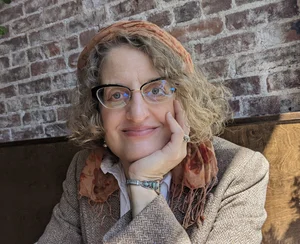
With what I thought was all my might, I didn’t want to go. Secretly, while my husband dreamed of visiting our daughter in Israel, I was determined to skip it this time around.
It was bad enough that she was going, I felt. With all the complications and implications, why would I, also, step into a war-torn region? And by my going, was I supporting a regime that has inflicted terrible suffering, death, and starvation in a war of revenge?
Plus, she’s an adult, she can make it through the year. (Also, who needs a twelve-hour flight?)
But a few weeks ago, I woke up with a strong urge: “I have to go.” I needed to see her world, be there for her, see that she was okay, even if she thought she didn’t need me. My husband said, go.
I called my daughter and told her I would be arriving in three days. She protested. I said she didn’t have a choice. It only took a moment for her to get excited.
Just after I arrived, the weather cleared from drenching, flooding rains to sunny, warm days. I had my own little bedroom with a lovely window where flowers hung outside and birds chirped, and where sometimes I could chase the sun. We walked miles every day, explored different neighborhoods, ate and celebrated Hanukkah in various houses and in the streets. I studied with her at her school, met her teachers and friends, got to live her life alongside her for a moment in time as she generously and lovingly included me.
As importantly, I helped her with applications for jobs and school, let her yell at me as I challenged her thinking and she articulated in writing who she is, and helped her create a home she could commit to. I shopped for her and cooked the freshest fish I’ve ever had, ate the most delicious fruits and vegetables, helped settle her more in her life for the next couple of years.
Soon, despite my conflicted feelings, in an ironic, paradoxical way, I began feeling reassured that she was truly safe walking around Jerusalem on her own at night. More than that, I experienced the feeling myself: gates and front doors unlocked and wide open everywhere I went, streets empty and quiet; open, unarmed synagogue spaces, a near-absence of the homeless and mentally ill, benches everywhere for sitting and hanging out, open-air shelves for book exchange, children playing outside alone into the night, and in some areas, Muslims and Jews living alongside each other intentionally, often ethnically indistinguishable from each other if not for religious garb.
This was the bubble I was in. It was a bit confusing; how could this problematic place contain so much ease and beauty alongside so much violence simultaneously?
In addition to these thoughts, one of my greatest fears since my daughter left for Israel had been that, by living in a small, sheltered world, she would “forget” about what was happening not too far away in Gaza and the West Bank. What if she, too, like those who don’t want to know or remember, lost touch? Would she lose part of her humanity?
But in that way, too, I was reassured. I saw that she has friends and teachers who intentionally live in ways that don’t allow that to happen.
Perhaps most of all, I was blown away when I learned that Rachel Goldberg-Polin, mother of Hersh, one of the now-famous hostages who died, would be the keynote speaker at my daughter’s school on my second day of study with her. I would be seeing and hearing this relentless, “leftist” peace advocate in the flesh! It was an amazing synchronicity to learn that she had refused until that moment to speak to audiences that agreed with her politically.
Rachel spoke of her son suffering what must have been excruciating physical pain with the loss of his arm along with other deprivations, while playing a particular role in bringing strength to other hostages, helping them survive with a purpose, knowing in a deep place within that he himself would die.
As my daughter and I sat together holding hands in the Beit Midrash, the study hall, the tears kept flowing as we listened.
The final message she left us with was something Hersh often quoted from Nietzsche and Viktor Frankl about how if you know your “why,” the “how” will follow. I imagine this is what has given Rachel the conviction to lobby tirelessly over the past two years, even after she learned of her Hersh’s death.
But it wasn’t just her personal story of unimaginable tragedy and suffering. It was also that she didn’t tell her story from the vantage-point of a victim. While meeting exhaustively with politicians and crowds, this mother has retained her sense of humor and sarcasm, and most of all her humanity.
And she has insisted that the rest of us do the same. She has not allowed her own pain to interfere with her convictions, and her belief in humanity and what is possible.
In our weekly Torah reading, we’ve just completed the Book of Genesis, which ended with the drawn out story of Joseph, his brothers, and his father Jacob.
Joseph and his brothers live in a bubble of privilege, removed from the poverty and struggles of the rest of the world, yet not devoid of great suffering,
Joseph starts out as an entitled, insensitive young man, the favorite “chosen” of his father, and later chosen by Pharaoh as his first-in-command. He is a dreamer who gets messages from God through his dreams, dreams that show future dominance over his brothers and father, which he thoughtlessly shares with his (understandably) jealous brothers.
Their jealousy causes them to lose their humanity when they throw him into a pit, sell him to some passing merchants, and report to their father that their brother has been torn by wild beasts. They mostly have no care for Joseph’s or their father’s suffering.
Joseph ends up in Egypt where he goes through many trials and tribulations that cause him to do many unsavory, often inhumane things as well. He spends time in a dungeon, but proving himself indispensable to Pharaoh, he rises to the greatest power, meanwhile propping up a tyrant for his own benefit and ultimately that of his family; though he saves them from the widespread famine, he also creates a system of slavery for the common people under Pharaoh’s rule, and unwittingly sets the stage for the enslavement of his own people (coming in the Book of Exodus this week!).
In the ultimate act of coldheartedness, when his brothers come down to Egypt looking for food, Joseph pretends not to know them. He puts them through a torturous series of events over several years, causing them to live in terror of his punishment (feel free to read the details here). Taking the pent up anger and resentment at the treatment he had received as a young man, the loss of home and family, Joseph wishes revenge.
To a large extent, Joseph has given up or lost his identity in order to fit in and survive. Most of all, he has tried to forget his painful past, even naming one of his sons for this wish. Why remember the pain when it’s possible to escape it?
But in the end, finally, after a series of meetings with his brothers, Joseph can contain himself no longer. What we get is one of the most touching stories of the Torah with the unleashing of a flood of tears, and wailing that can be heard throughout the palace and the land. Joseph finds his humanity again, as do his brothers. What happens through their suffering is that they ultimately become more sensitive to each other’s pain, remorseful of the ways they have hurt each other. Starting from their own little bubbles, they have experienced the world, and come through with a more mature understanding of how complex and multilayered things are.
Joseph also finally understands that there was a bigger mission he was assigned by God through his dreams, for the wider good (we’ll forgive him the details), not just for his personal empowerment.
Perhaps Torah’s message is that we can grow through our suffering, but only if we open to it and allow it.
We, also, can allow our suffering to strip us of our humanity, as individuals and as a collective. We can focus on revenge. We can choose to stay in our own little bubble, which may feel safe and protected, surrounded by those like us, who agree with us, closing our eyes to the suffering of others, or worse, believing they are less than human and deserve their pain.
Or we can choose the path Rachel Goldberg-Polin and her husband have: to take our pain and suffering and use it for increasing empathy, and to continue to insist on peace and the possibility of happy coexistence.
There are days I still wake up and can’t believe I actually went to Israel, but I’m so happy I did. Besides being there for my daughter, what I found was a place much more complex and multilayered than I’d understood before. It was a reminder that such is the case for the world in general. It’s something I don’t want to forget.
I also don’t want to forget Rachel’s message that if we know our why (and for me, stick to my convictions for a world of peace and humanity), we too, can figure out our how.